
South Africa’s just transition must deliver more than commitments and climate finance pledges. It must translate into decent work, stronger livelihoods and meaningful improvements in the lives of workers and communities affected by the shift to a low-carbon economy.
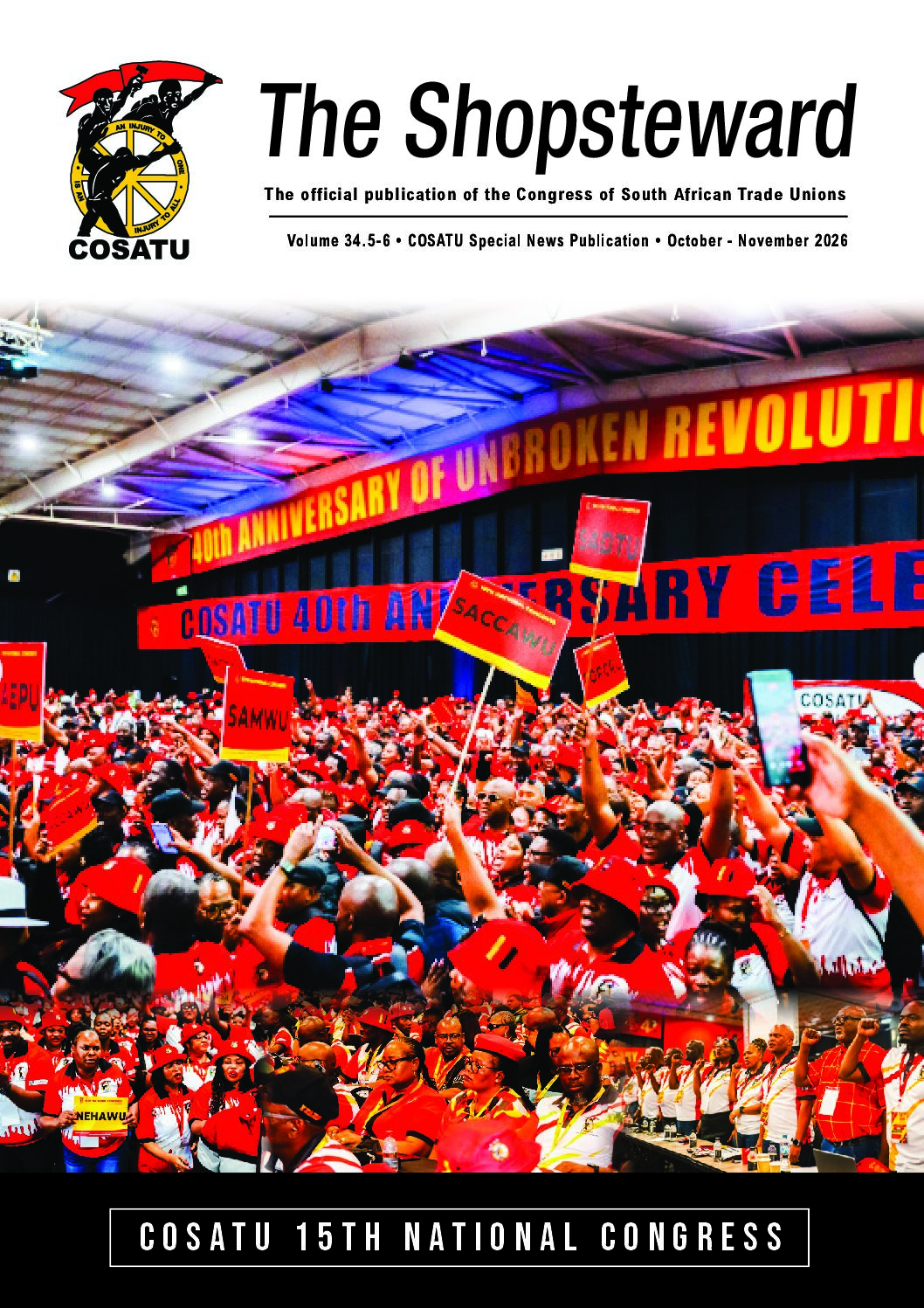
Writing in the October–November 2026 edition of COSATU’s The Shopsteward, the Institute for Economic Justice’s (IEJ) Moliehi Mafantiri examines the financing gap holding back a worker-centred just transition in South Africa. She argues that while international climate finance commitments are important, South Africa must also mobilise domestic resources to fund the economic transformation workers and communities need.
Drawing on the IEJ and COSATU’s A Worker-Centred Framework for Financing the Just Transition, the article outlines how reforms to monetary policy, fiscal policy and development finance institutions could unlock public resources. These include broadening the South African Reserve Bank’s mandate to support employment and green industrial transformation, establishing a Climate Response Fund with the potential to raise approximately R100 billion annually, and reforming the Industrial Development Corporation to prioritise decent work and investment in affected communities.
Mafantiri also makes the case for recognising domestic resource mobilisation in international climate negotiations, while holding wealthier countries accountable for their climate finance obligations.
The article, “Workers Cannot Afford a Just Transition that Stays on Paper”, appears on pages 12–15 of The Shopsteward, Volume 34.5–6, October–November 2026.