Localising the Energy Transition
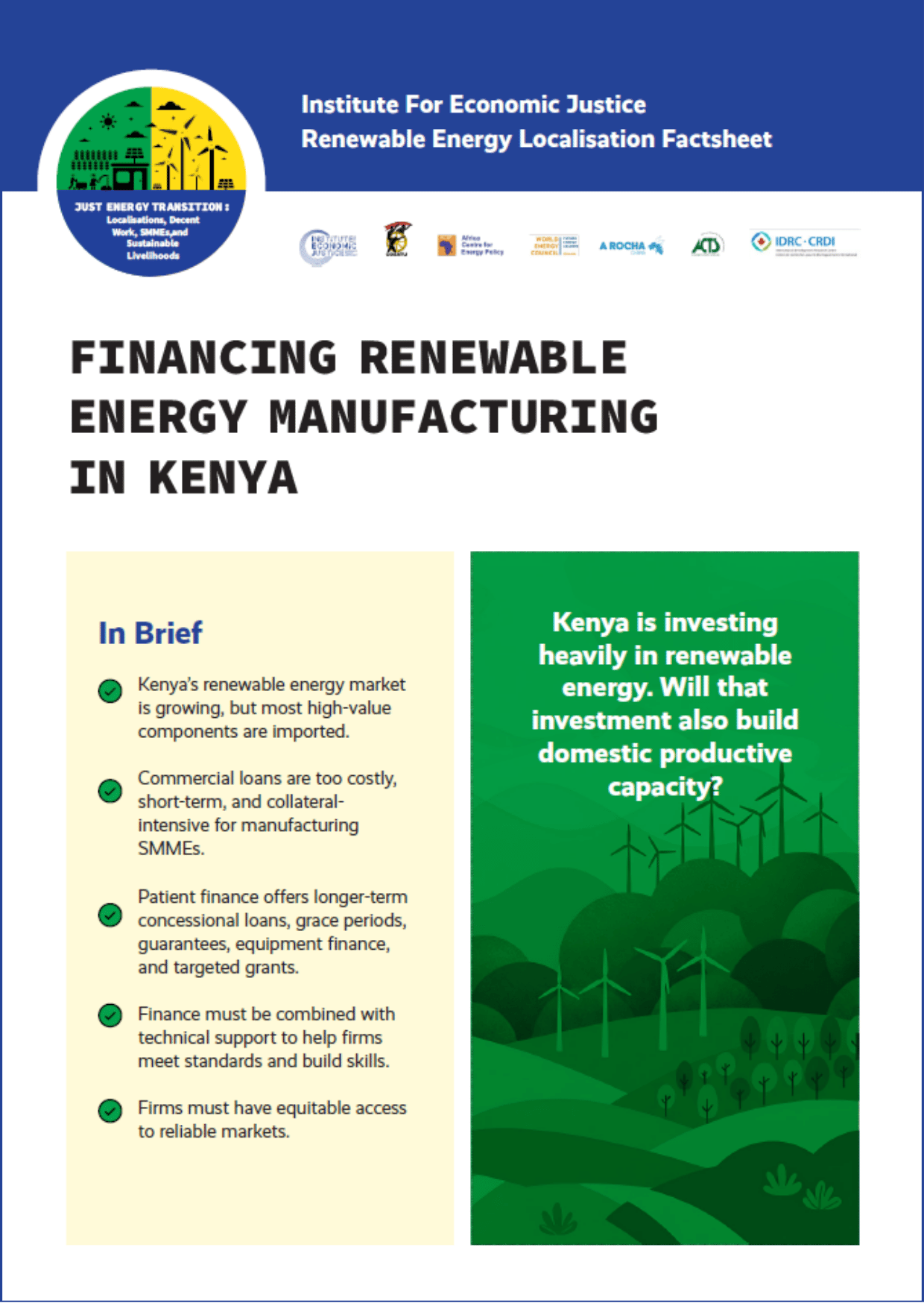
Advancing a Just Energy Transition: Localisation, Decent Work, and Sustainable Livelihoods is a multi-country research project examining the energy sectors of Ghana, Kenya, and South Africa in the context of global decarbonisation. Focusing on solar modules, wind turbine towers, and battery storage systems, the project assesses how localisation, through local production, ownership, SME participation, and firm upgrading, can move beyond simple assembly toward higher value-added industrialisation.
It investigates how decent work, gender equity, and sustainable livelihoods can be embedded in renewable energy national and global production networks, generating evidence to inform public policy that strengthens local manufacturing and avoids reproducing unequal global economic patterns. The project is implemented through a partnership of policy institutes, civil society organisations, labour bodies, researchers, and industry actors across the three countries.

Institute for Economic Justice (IEJ) | Lead Partner
The Institute for Economic Justice is a South African economic policy think tank advancing alternatives to austerity, inequality, and climate injustice through rigorous research, advocacy, and public engagement. IEJ leads the overall project and undertakes research and coordination in South Africa.

Congress of South African Trade Unions (COSATU)
COSATU is South Africa’s largest trade union federation, representing workers across key sectors of the economy. Within this project, COSATU brings organised labour into the heart of the just energy transition, ensuring that worker interests, job security, and decent work shape policy and investment decisions.

Africa Centre for Energy Policy (ACEP)
The Africa Centre for Energy Policy (ACEP), A Rocha Ghana, and the World Energy Council’s Future Energy Leaders—Ghana (FEL—Ghana) jointly lead the Ghana research stream as a consortium. Together, they analyse how renewable energy industrialisation can drive local economic development and inclusive growth, drawing on their complementary expertise in energy governance, environmental sustainability, and emerging energy leadership.

A Rocha Ghana
The Africa Centre for Energy Policy (ACEP), A Rocha Ghana, and the World Energy Council’s Future Energy Leaders—Ghana (FEL—Ghana) jointly lead the Ghana research stream as a consortium. Together, they analyse how renewable energy industrialisation can drive local economic development and inclusive growth, drawing on their complementary expertise in energy governance, environmental sustainability, and emerging energy leadership.
World Energy Council’s Future Energy Leaders—Ghana (FEL—Ghana)
The Africa Centre for Energy Policy (ACEP), A Rocha Ghana, and the World Energy Council’s Future Energy Leaders—Ghana (FEL—Ghana) jointly lead the Ghana research stream as a consortium. Together, they analyse how renewable energy industrialisation can drive local economic development and inclusive growth, drawing on their complementary expertise in energy governance, environmental sustainability, and emerging energy leadership.

Africa Centre for Technology Studies (ACTS)
The Africa Centre for Technology Studies (ACTS) is an intergovernmental policy research institution headquartered in Nairobi, Kenya, specialising in science, technology, innovation, and sustainable development. ACTS leads the Kenya component of the project, examining how clean energy value chains can support decent work, localisation, and technological upgrading.
Just Energy Transitions, Localising the Energy Transition
South African Wind Turbine Manufacturing and Industrial Policy
Just Energy Transitions, Localising the Energy Transition
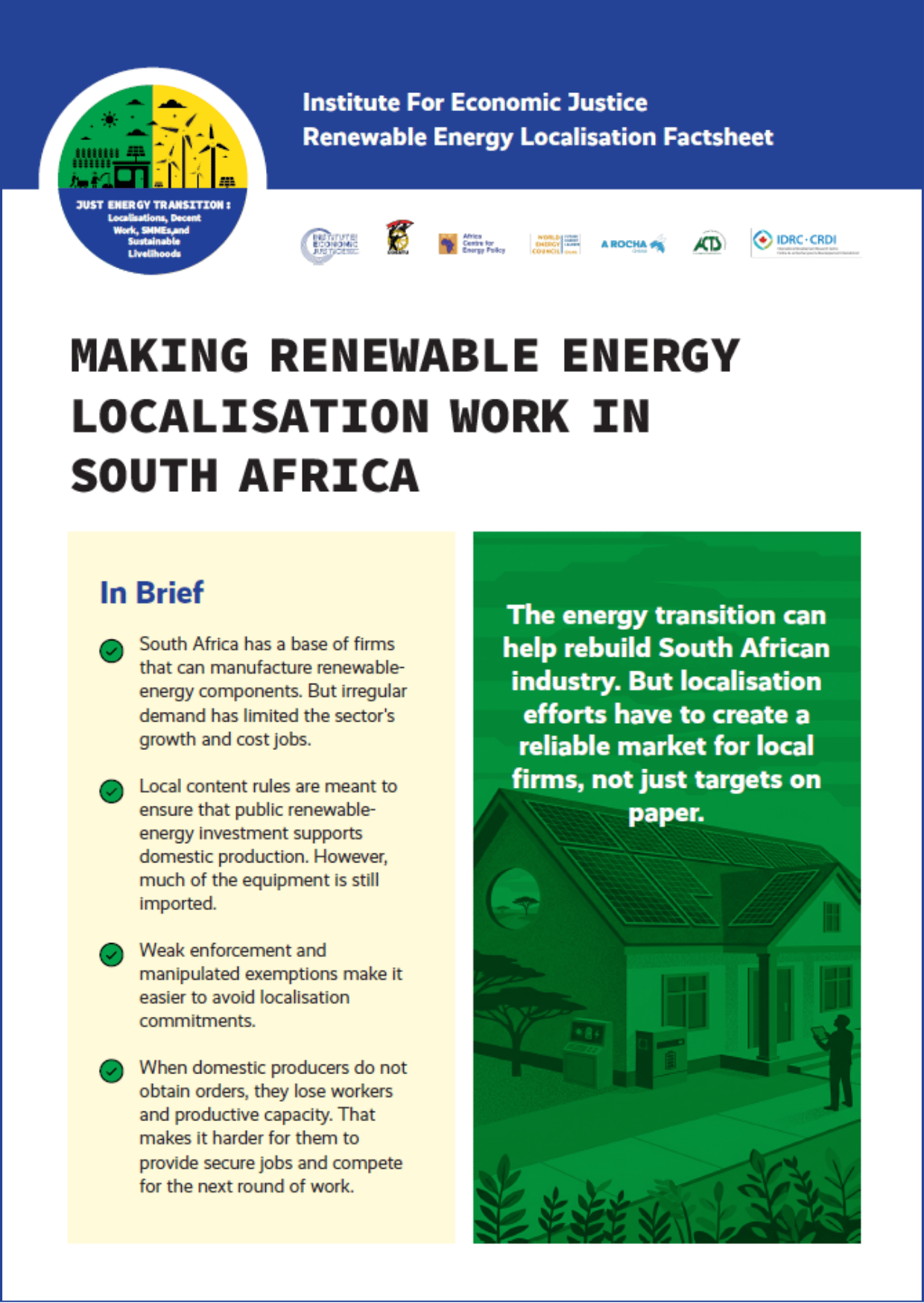
Making Renewable Energy Localisation in South Africa Work
Just Energy Transitions, Localising the Energy Transition