Budget Justice Coalition response to the 2018 Medium Term Budget Policy Statement (MTBPS)
This submission highlights areas within selected programmes that are in need of concerted interventions in relation to budgeting and planning.
This submission highlights areas within selected programmes that are in need of concerted interventions in relation to budgeting and planning.
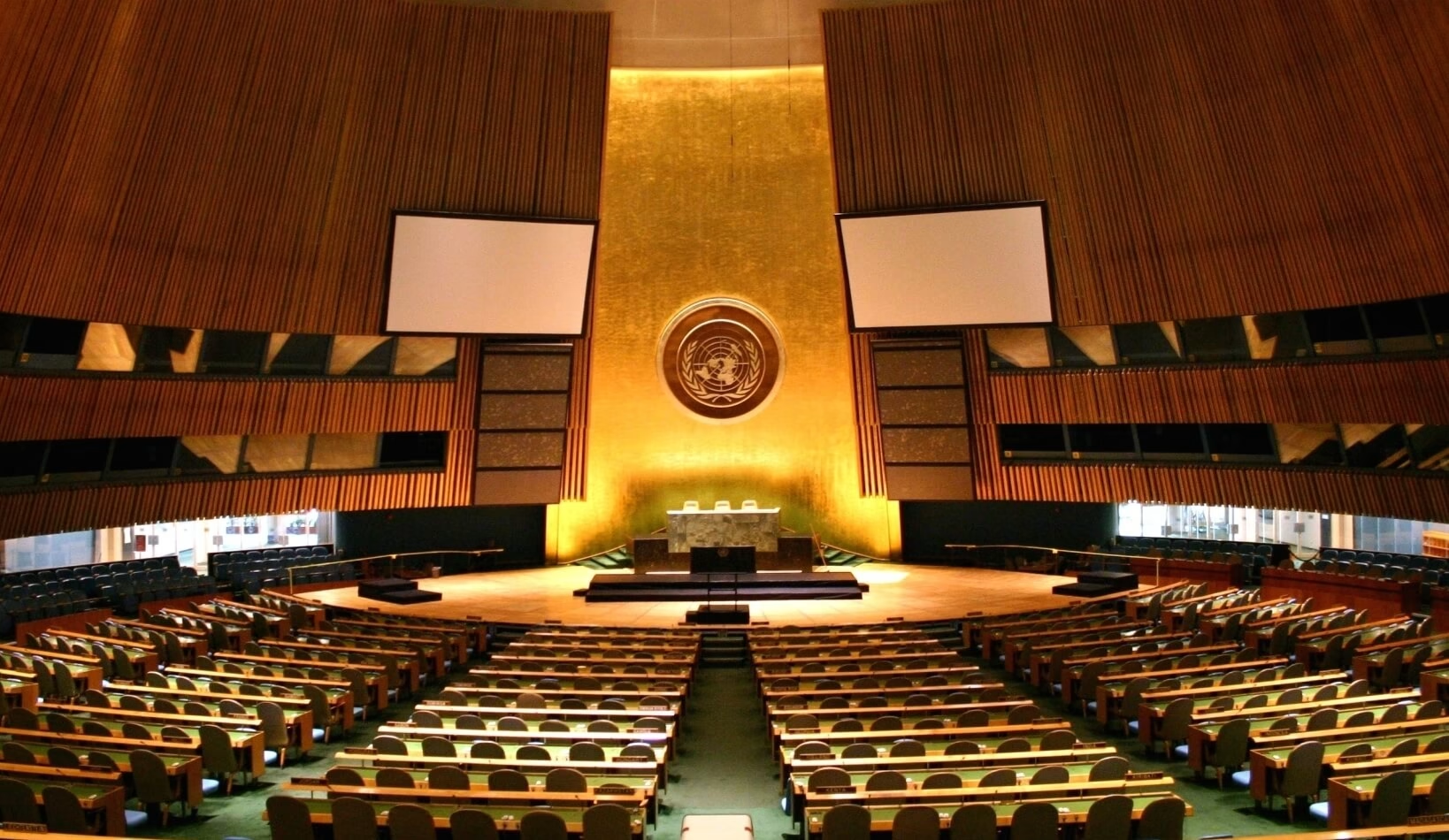
This submission outlines the key concerns and recommendations of the Institute for Economic Justice, SECTION27 and CESR on the occasion of South Africa's review before the United Nations Committee.
The COVID-19 pandemic and the national responses to it brought the world almost to a complete lockdown.
The South African economy has faced a slowdown since the end of the metals boom in 2011.
The private financial sector can rarely finance developmentally important sectors on its own and publicly owned development finance institutions (DFIs) continue to fill these gaps in both industrialised and developing economies.
The future of the agricultural sector as the largest employer, particularly in the rural areas, is at risk.
Manufacturing is particularly important to the economy as it has economic multipliers from value addition but 29% of South Africa's exports are carbon embedded.
South Africa is a coal-dependent economy and the contribution of coal as the primary feedstock to electricity generation ? currently at close to 90%
Coal is under pressure in ways that over time will impact negatively on South Africa's coal mining value chain and coal exports.
The South African financial sector has seen significant expansion over the last two decades and finance has come to play a more important role in the economy and the lives of South Africans.