COVID-19 Supplementary Budget Analysis
On Wednesday 24 June the Minister of Finance tabled a Supplementary Budget
On Wednesday 24 June the Minister of Finance tabled a Supplementary Budget
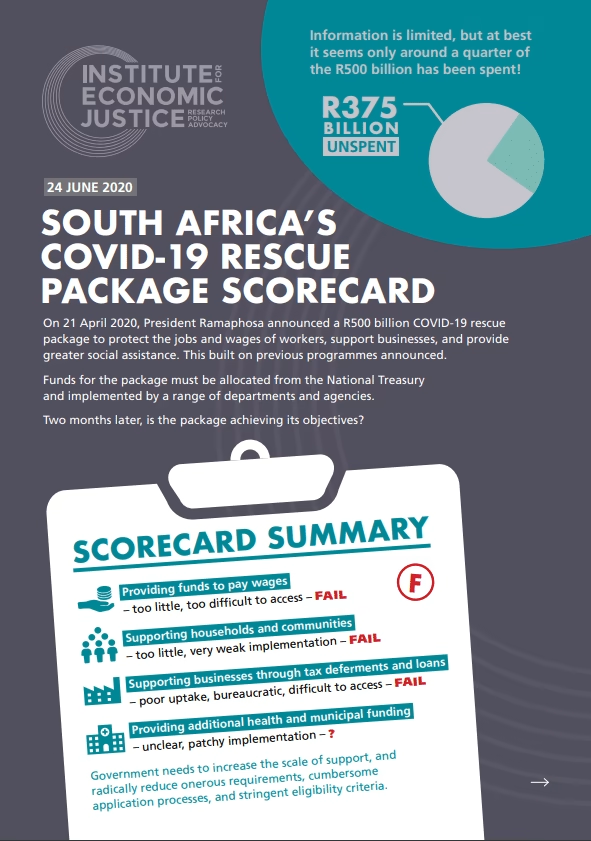
On 21 April 2020, President Ramaphosa announced a R500 billion COVID-19 rescue package to protect the jobs and wages of workers, support businesses, and provide greater social assistance. This built on previous programmes announced.
The COVID-19 pandemic has delivered a massive blow to the global economy and will plunge South Africa's economy deeper into recession. Every South African citizen must do their part in physical distancing, but we must also take bold, decisive action to mitigate the social and economic effects of the pandemic; social solidarity must guide us.
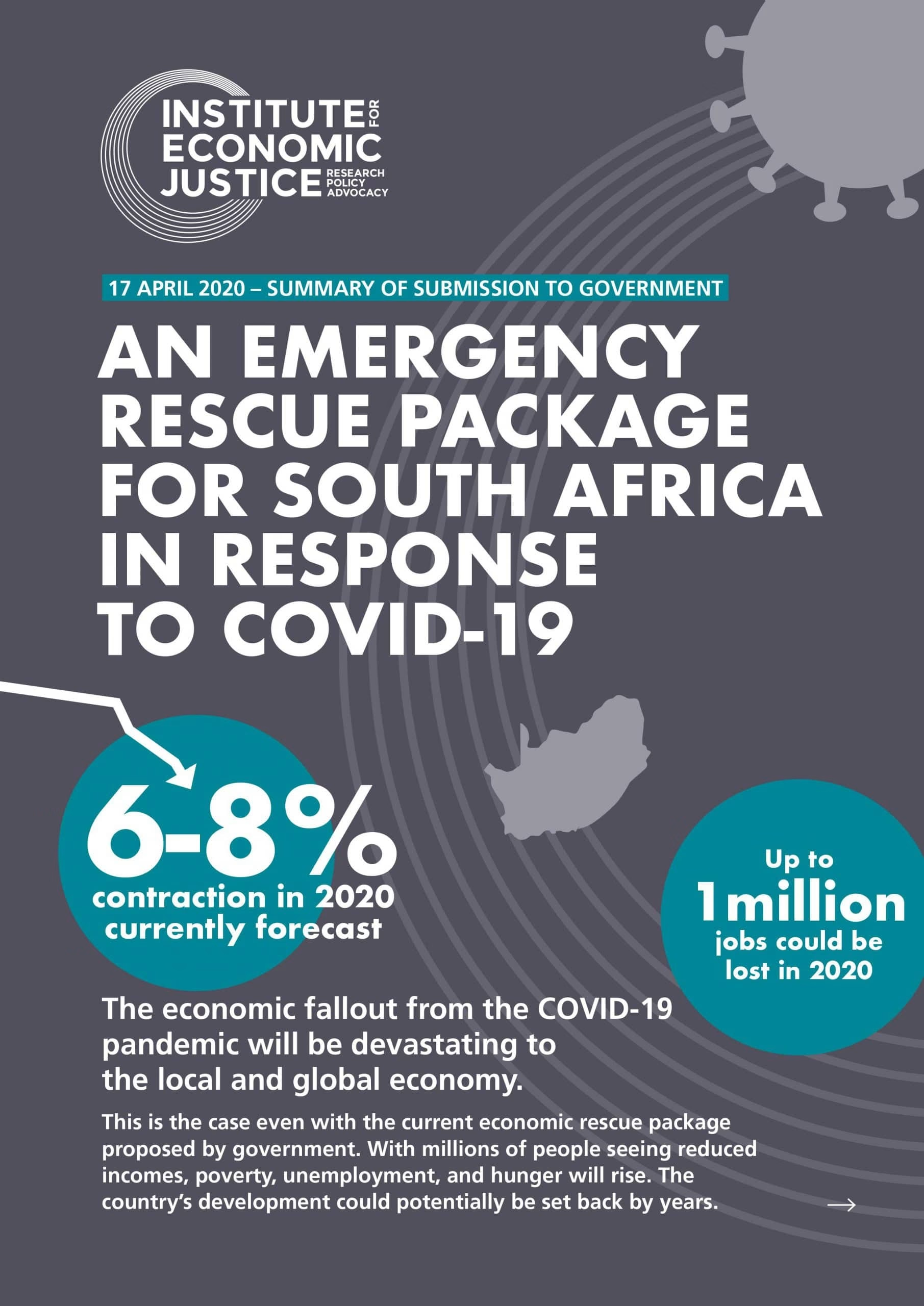
A submission to the government on what an emergency rescue package for South Africa should entail in its response to the crisis caused by the COVID-19 pandemic. The IEJ proposes a R 410 billion rescue package to fund the healthcare system and support workers and small businesses.
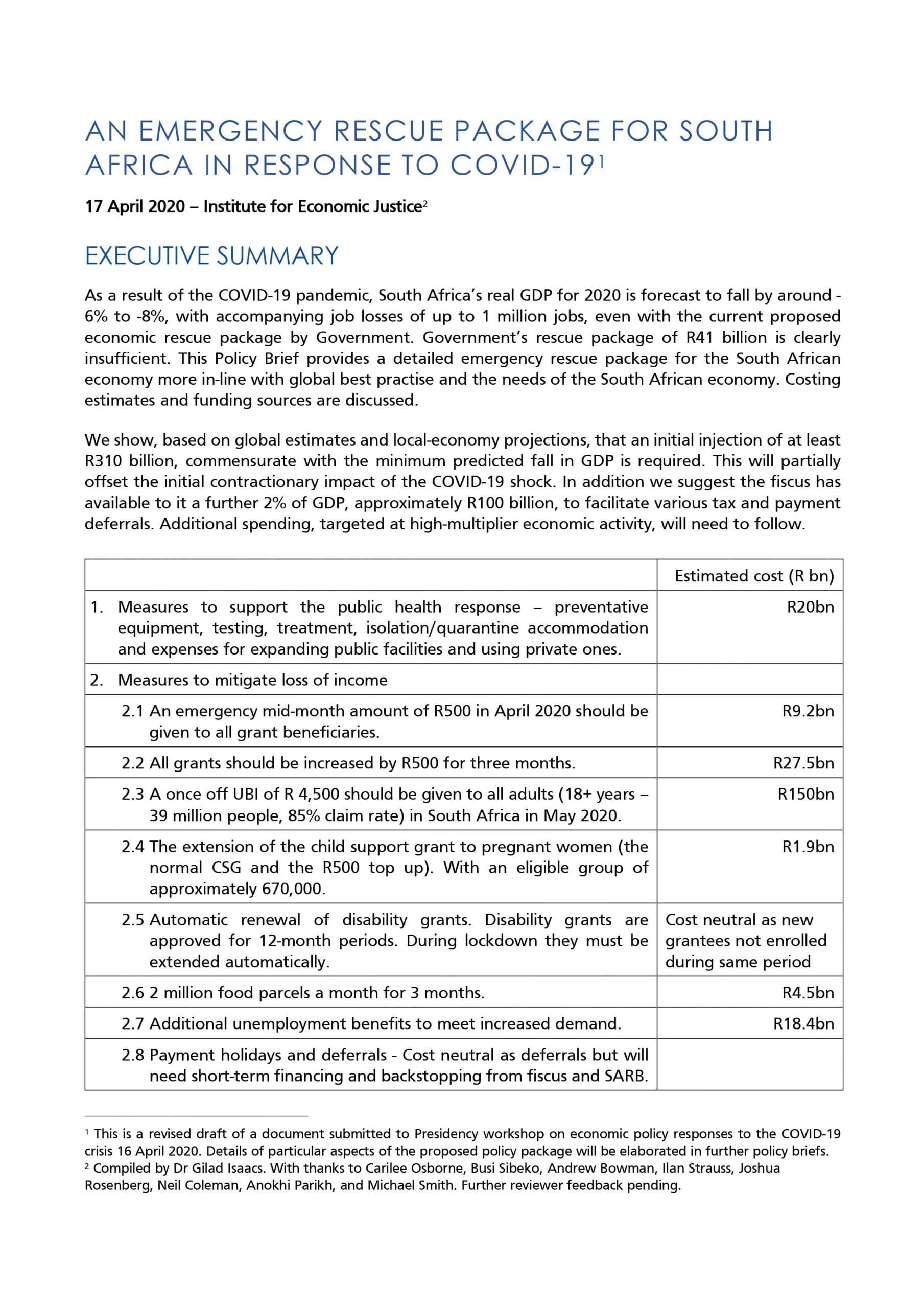
As a result of the COVID-19 pandemic, South Africa's real GDP for 2020 is forecast to fall by 10 %, with accompanying job losses of up to 1 million jobs. Government's rescue package of R41 billion is clearly insufficient. This Policy Brief provides a detailed emergency rescue package for the South African economy more in-line with global best practise and the needs of the South African economy. Costing estimates and funding sources are discussed.
This paper estimates income and employment multipliers for South Africa, based on a closed input-output model for the year 2018. Our results are in line with the literature on fiscal multipliers in South Africa and apply to the current conditions of high unemployment, economic stagnation and a negative output gap. Based on our estimates, we predict that the fiscal belt-tightening proposed in South Africa's 2020 Budget, will reinforce the slow growth of the South African economy and augment the already high rate of unemployment.
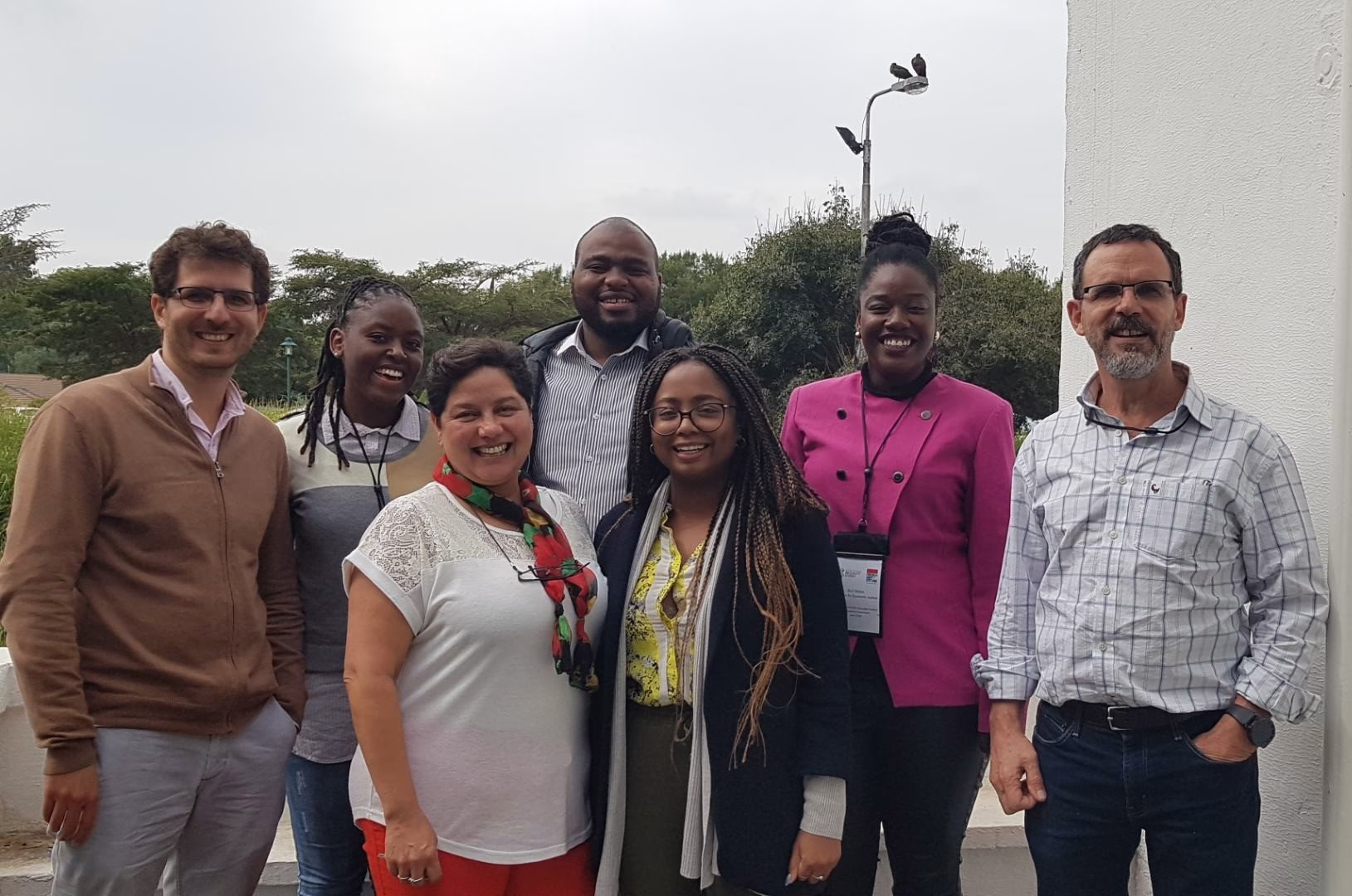
2019 was a busy year for the Institute for Economic Justice! Download our 2019 annual newsletter to see what we got up to.
This report looks at the national minimum wage parity for domestic workers, farmworkers and expanded public works programme (?EPWP?) workers. The farm, domestic, and EPWP sectors were, prior to the introduction of the National Minimum Wage (NMW), ultra-low wage sectors…
The 2019 MTBPS shows that government is choosing to deepen budget Austerity.
Using international evidence, this literature review shows how austerity leads to rising unemployment, falling incomes and increased inequality.