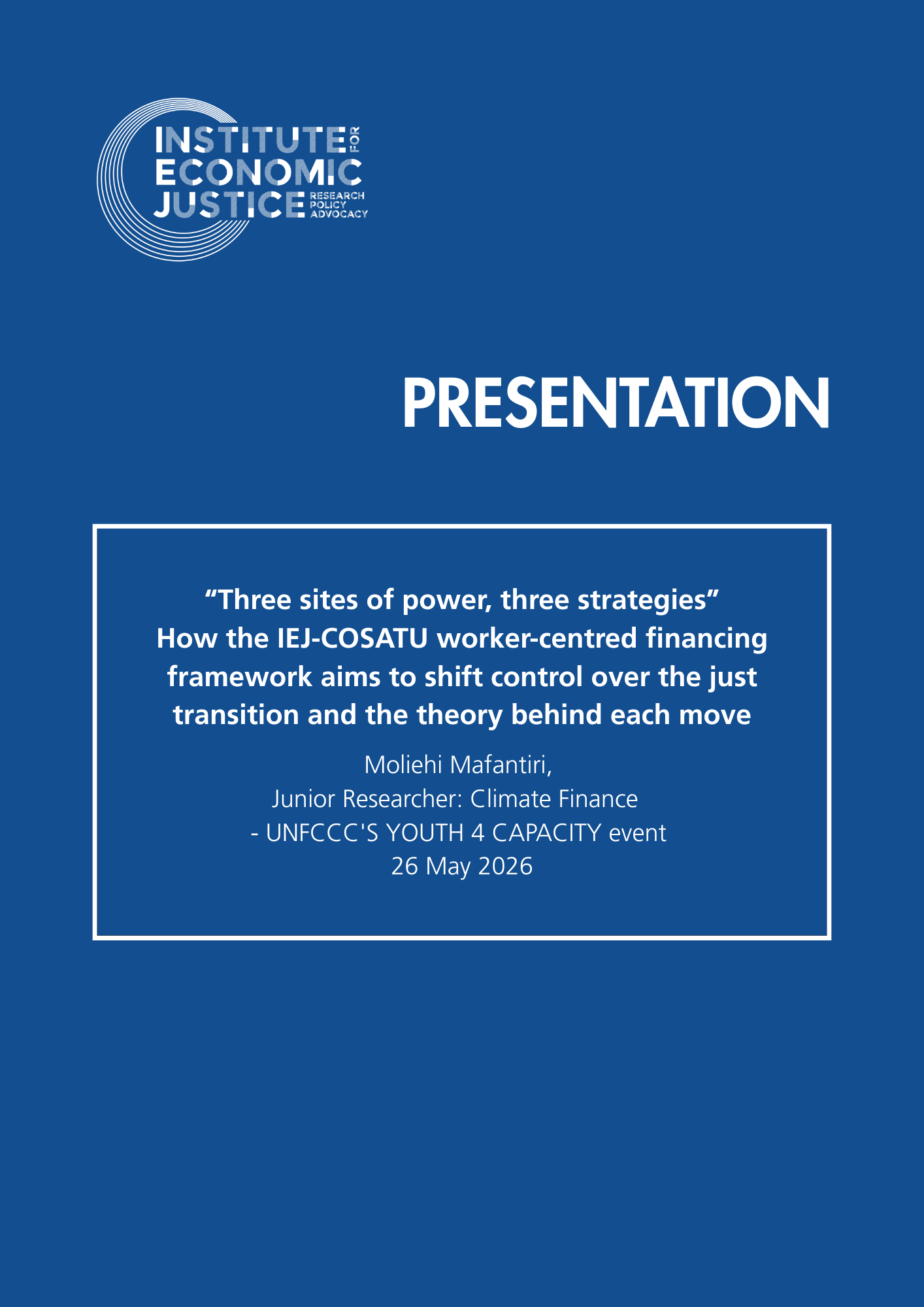
Moliehi Mafantiri presented the IEJ–COSATU worker-centred alternative financing framework for the just transition virtually at the UNFCCC Youth4Climate Movement Building Bootcamp, during Session 3 of the How to Sustain a Movement Bootcamp, titled “Strategies to Shift Power”.
The session explored how movements can move beyond reacting to power and develop lasting influence over the institutions and decisions shaping climate action.
Understanding and shifting power
The session examined who holds power, how it is contested, and how young climate organisers can build and redistribute power over time. It focused on practical strategies for building leverage, forming alliances and sustaining influence beyond individual campaigns.
A worker-centred approach to financing the just transition
The IEJ–COSATU framework provides an alternative approach to financing the just transition, placing workers and communities at the centre of economic transformation. It highlights the importance of challenging existing financial and institutional arrangements that shape who controls climate investment and who benefits from the transition.
By connecting climate finance to questions of ownership, decision-making and public accountability, the framework offers movements a basis for advocating a transition that advances workers’ rights and economic justice.
Building lasting movement power
The bootcamp encouraged youth climate advocates to move from mobilisation towards sustained influence in decision-making spaces. Building alliances, strengthening collective leverage and engaging with institutions are central to ensuring that movements can shape climate policy and financing arrangements over the long term.
Conclusion
Shifting power requires organised movements capable of challenging existing structures and influencing the institutions that govern the just transition. A worker-centred financing approach connects youth climate advocacy with broader efforts to advance economic justice and equitable climate action.