
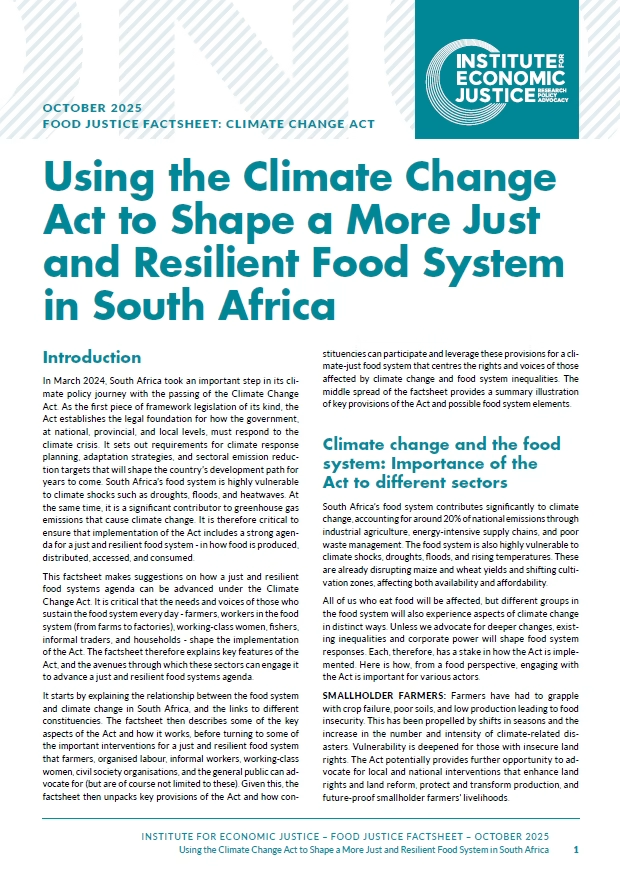
Using the Climate Change Act to Build a Just and Resilient Food System
In March 2024, Parliament passed the Climate Change Bill. It became the Climate Change Act in July 2024, establishing South Africa’s first framework legislation for how government must respond to the climate crisis. The Act sets out processes for climate planning, adaptation, and emissions reduction across all sectors. This factsheet explores how it can be used to build a food system that is both just and resilient.
Download the Factsheet in Your Preferred Language
Now available in five languages. Select a language below to read or download the factsheet:
Why Food Systems Matter
South Africa’s food system contributes around 20% of national emissions and is highly vulnerable to droughts, floods, and rising temperatures. The Act offers opportunities to address these dual challenges—reducing emissions while supporting those who keep the food system running: farmers, workers, traders, women, and households.
Opportunities for Action
The Climate Change Act creates several pathways for advocacy and participation:
- Policy alignment: All government departments must align their decisions with the Act’s principles. This opens the door for stronger and fairer climate and food policies.
- Adaptation planning: National and sectoral adaptation plans must be developed, offering civil society the opportunity to embed food justice and agroecology in climate responses.
- Local action: Provinces and municipalities must develop climate response plans. These provide opportunities to integrate sustainable local food systems and protect informal traders and smallholders.
- Participation: Civil society can use mandated public consultation processes and forums, such as the Presidential Climate Commission, to advance a climate-just food system.
A Call to Collective Engagement
A just transition for food must address structural inequalities, recognise care work, protect workers, regulate corporate power, and secure land and livelihoods. By engaging with the Act’s processes, South Africans can help ensure that climate action strengthens, rather than undermines, food justice and resilience.