Economic inequality has reached extreme levels globally, concentrating wealth and political power while limiting governments’ ability to finance quality public services, climate action and social protection. Under its theme of solidarity, equality and sustainability, South Africa’s G20 Presidency placed these challenges more firmly on the international agenda.
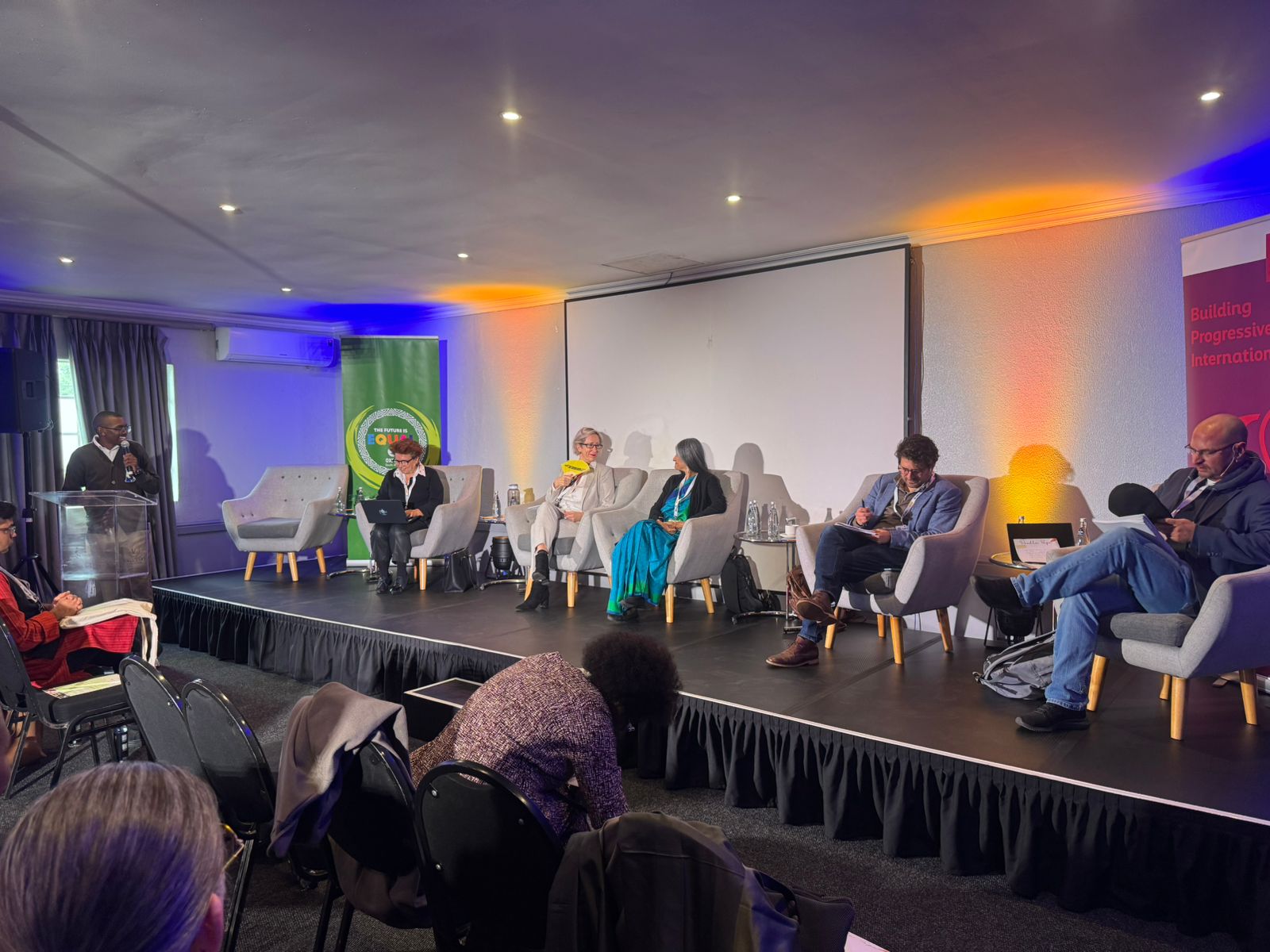
Partners in the South African Tax Justice Working Group—including Oxfam South Africa, Friedrich-Ebert-Stiftung South Africa, the Institute for Economic Justice (IEJ), the Independent Commission for the Reform of International Corporate Taxation (ICRICT), and the Alternative Information and Development Centre (AIDC)—hosted a high-level dialogue on taxation and global inequality alongside the G20 Social Summit.
The dialogue examined the findings and recommendations of the G20 Extraordinary Committee of Independent Experts on Global Inequality. Commissioned during South Africa’s G20 Presidency and chaired by Nobel Prize-winning economist Professor Joseph Stiglitz, the Committee produced the G20’s first report dedicated to global inequality.
Professor Jayati Ghosh, a member of the Extraordinary Committee and Co-Chair of ICRICT, delivered the keynote address. She emphasised that inequality is shaped by economic policies, laws and institutions—and can therefore be reversed through deliberate policy choices.
The subsequent panel featured Dr Gilad Isaacs, Executive Director of the IEJ; Bodo Ellmers, Director of the Financing for Development and International Financial Architecture Programme at Global Policy Forum; Susana Ruiz, Global Lead on Tax Justice at Oxfam International; and Tengo Tengela, Trade and Industrial Policy Coordinator at COSATU.
Discussions explored whether the G20 can help advance a more progressive international tax system and address the concentration of wealth and corporate power. Participants highlighted the importance of taxing extreme wealth and multinational corporations more effectively, advancing debt relief, supporting the proposed International Panel on Inequality, and strengthening negotiations towards a UN Framework Convention on International Tax Cooperation.
The dialogue also underscored the need for progressive organisations and movements to build alliances across borders and use more inclusive multilateral institutions to carry forward the commitments made during South Africa’s G20 Presidency.
Read the G20 Global Inequality Report
Read about the outcomes of the dialogue
Explore the IEJ’s G20 research and policy engagement