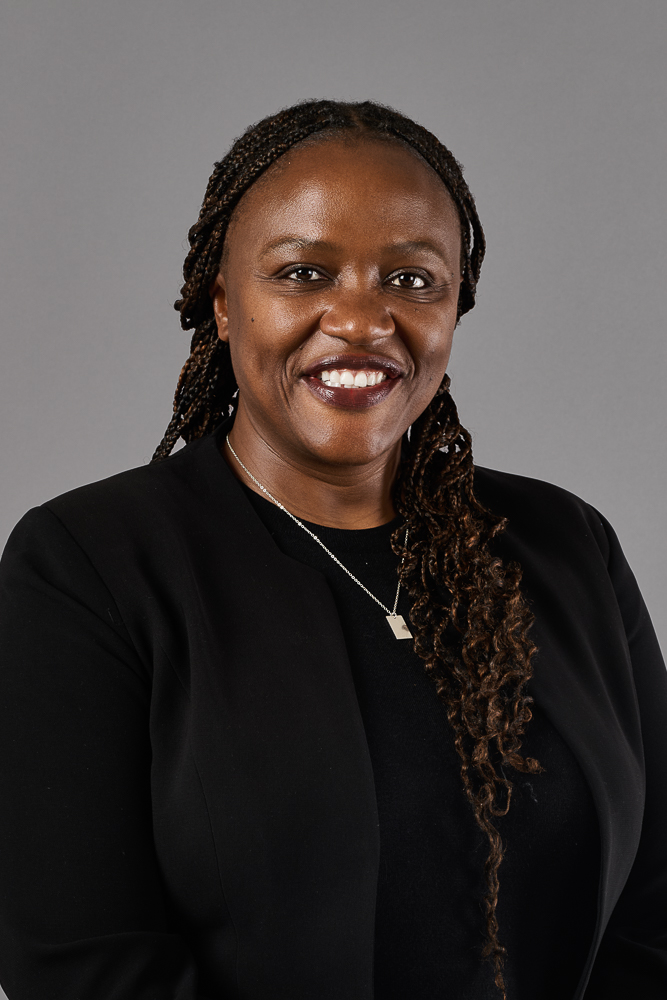
Dr. Charity Rusere
Charity Rusere is a Postdoctoral Research Fellow on the Bio-social security: Social Science Transformations of Biosecurity (BIOSSCI) project at the Institute for Economic Justice (IEJ). BIOSSCI is an international research project led by the University of Oxford in partnership with the IEJ and WorldFish. The project examines biosecurity across three contrasting country contexts: poultry production in the United Kingdom, aquaculture systems in Bangladesh, and livestock systems in South Africa.
She is an interdisciplinary researcher and development practitioner whose work examines agrarian change, land governance, rural livelihoods, food systems and rural development. She has extensive experience in applied research, policy analysis and programme design across academia, government and international development. Charity has been an independent development consultant and researcher with the Sam Moyo African Institute for Agrarian Studies and an Enterprise Development Manager at Shanduka Black Umbrellas. Charity holds a PhD in Poverty, Land and Agrarian Studies from the University of the Western Cape in addition to MSc and BSc degrees in Agricultural and Applied Economics. Her current work focuses on livestock biosecurity, biosocial security, animal health, and food-system resilience and transformation.
Postdoctoral Research Fellow on the BIOSSCI project at the Institute for Economic Justice (IEJ). BIOSSCI is a European Research Council-funded international research project led by the University of Oxford in partnership with the IEJ and WorldFish.
The Fellow will join the European Research Council-funded advanced research project BIOSSCI ‘Social Science Transformations of Biosecurity’ based at the University of Oxford. The fellowship is housed within the IEJ’s Food Systems project. BIOSSCI is a social science-led project that aims to generate innovative approaches to disease threats that impact animal and human health.
The fellowship hosted at IEJ is one of three initial PDR appointments to a five-year project and will work with internationally based colleagues in the United Kingdom and Bangladesh to provide comparative analyses and co-learning between case country settings.