
The Institute for Economic Justice (IEJ) welcomes the G20 South Africa Summit: Leaders’ Declaration and the successful conclusion of South Africa’s G20 Presidency.
The IEJ is honoured to have contributed to the G20 as an official resource partner to the Sherpa track. Our engagement reflects our commitment to advancing equitable, development-oriented, and democratically grounded economic policy within a rapidly shifting global landscape. The IEJ worked tirelessly to produce high-level research reports, workshops, public-facing events, and ongoing support to several Working Groups and Task Forces, as well as to the Sherpa and Presidency. We believe the G20 outcomes, though limited, lay a foundation for future work on pressing global economic challenges which have a direct impact on the lives of the world’s majority.
This year’s G20 process represents one of the most significant diplomatic achievements in South Africa’s post-apartheid history. Achieving consensus in an increasingly fragmented multipolar world is a commendable feat. Securing a declaration supported by the overwhelming majority of G20 countries, despite active attempts by some right-wing governments to derail the process, illustrates the diplomatic acumen with which the Presidency and Sherpa team navigated geopolitical tensions. South Africa’s handling of the G20 Presidency has significantly elevated our standing on the international stage. South Africa set an ambitious and progressive agenda, mainstreaming core issues such as critical minerals development, sustainable industrial policy, food price stabilisation, the high cost of capital facing developing countries, debt sustainability, inequality, AI regulation, and the care economy.
However, as is characteristic of consensus-based multilateralism, the final outcome documents reflect the lowest common denominator among member states, diluting some of the more transformative proposals that were advanced in the course of negotiations. The G20 did not, therefore, deliver sufficient progress on the pressing development and climate challenges facing South Africa and the African continent. Much more needs to be done to advance the objectives of South Africa’s G20 Presidency and sustainable development more broadly.
While the declaration demonstrates a Global South country’s ability to sustain multilateralism in a moment of immense volatility, it falls short on several urgent priorities, in particular on: gender equality, scaling up climate finance and climate ambition, the Sustainable Development Goals (SDGs), international taxation, debt sustainability, and financing for development. These limitations highlight both domestic and international challenges, with multilateralism evolving in ways that make coordinated global policy-making increasingly difficult. Far more is required to effectively tax the ultra-wealthy and multinational corporations, address illicit financial flows, reform and expand the G20 Common Framework towards developmental debt restructuring, transform the trading regime and realign the World Trade Organisation (WTO) to developmental priorities, strengthen global care-economy frameworks, and accelerate the just transition and disaster response, including scaling up financing by public development banks.
Critically, the true measure of the G20 Presidency’s success lies in translating commitments made into tangible improvements in people’s lives. The G20 process has cracked open the door on issues critical to the development of the African continent – actively managing food price volatility, bringing down the high cost of capital, reducing inequality, scaling up sustainable industrial policy, harnessing critical minerals for local beneficiation, and more. The challenge now is to continue to use multilateral fora to open domestic policy space, while taking advantage of this space through national and regional policy domestication in a manner that improves our economies, creates decent jobs, reduces inequalities and strengthens essential services.
The IEJ remains committed to advancing a vision of progressive internationalism. We will continue to mobilise rigorous research, engage in evidence-based advocacy, and foster deep partnerships with civil society and policymakers to promote global socioeconomic justice.
[ENDS]
For media inquiries, please contact:
Given Sigauqwe | given.sigauqwe@iej.org.za | 0739882870
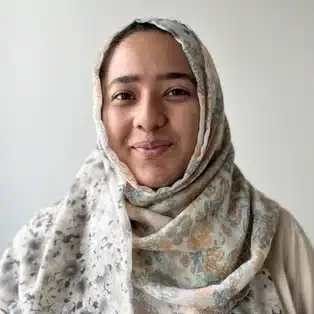 Amaarah is a Junior Programme Officer in the Rethinking Economics for Africa project. She is currently studying towards her Masters in Applied Development Economics at Wits University.
 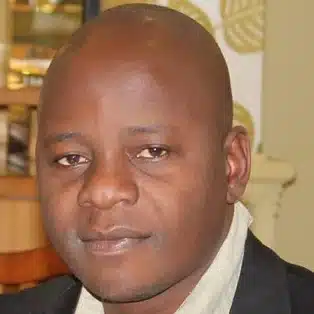 Dr James Musonda is the Senior Researcher on the Just Energy Transition at the IEJ. He is also the Principal Investigator for the Just Energy Transition: Localisation, Decent Work, SMMEs, and Sustainable Livelihoods project, covering South Africa, Ghana, and Kenya.
 Dr Basani Baloyi is a Co-Programme Director at the IEJ. She is a feminist, development economist and activist. She gained her research experience while working on industrial policy issues in academia, at the Centre For Competition, Regulation and Economic Development (CCRED) and Corporate Strategy and Industrial Development (CSID) Unit.
 Dr Andrew Bennie is Senior Researcher in Climate Policy and Food Systems at the IEJ. He has extensive background in academic and civil society research, organising, and activism. Andrew has an MA in Development and Environmental Sociology, and a PhD in Sociology on food politics, the agrarian question, and collective action in South Africa, both from the University of the Witwatersrand.
 Juhi holds a Bachelor of Arts degree in International Relations and Sociology from Wits University and an Honours degree in Development Studies from the University of Cape Town. Her current research focus is on social care regimes in the South African context, with a particular focus on state responses to Early Childhood Development and Long-Term Care for older persons during the COVID-19 pandemic. Her other research areas include feminist economics, worlds of work and the care economy.
 Bandile Ngidi is the Programme Officer for Rethinking Economics for Africa. Bandile has previously worked at the National Minimum Wage Research Initiative and Oxfam South Africa. He holds a Masters in Development Theory and Policy from Wits University. He joined the IEJ in August 2018. Bandile is currently working on incubating the Rethinking Economics for Africa movement (working with students, academics and broader civil society).
  Liso Mdutyana has a BCom in Philosophy and Economics, an Honours in Applied Development Economics, and a Masters in Applied Development Economics from Wits University. His areas of interest include political economy, labour markets, technology and work, and industrial policy. Through his work Liso aims to show the possibility and necessity of economic development that prioritises human wellbeing for everyone.
 Joan Stott holds a Bachelor of Business Science in Economics and a Master’s in Economics from Rhodes University. She brings to the IEJ a wealth of experience in public finance management, policy development, institutional capacity-building, and advancing socioeconomic and fiscal justice.
 Siyanda Baduza is a Junior Basic Income Researcher at IEJ. He holds a BSc in Economics and Mathematics, an Honours degree in Applied Development Economics, and is currently completing a Master’s degree in Applied Development Economics at the University of the Witwatersrand. Siyanda’s research focuses on the impacts of social grants on wellbeing, with a particular focus on the gendered dynamics of this impact. His interests include applied micro-economics, policy impact evaluation, labour markets, gender economics, and political economy. He is passionate about translating economic research into impactful policy.
 Shikwane is a Junior Programme Officer at IEJ focusing on civil society support and global governance in the G20. He has a background in legal compliance, IT contracting and student activism. He holds degrees in Political Studies and International Relations, as well as an LLB, from the University of the Witwatersrand.
 Dr Tsega is a Senior Researcher focusing on Women’s Economic Empowerment within the G20. She examines gender equity in economic policy, with expertise in food systems and small enterprise development. She holds a PhD in development studies from the University of the Western Cape, an MA in Development Economics, and degrees in Development Studies and Economics from UNISA and Addis Ababa University.
 Nerissa is a G20 Junior Researcher at IEJ, focusing on advancing civil society priorities within the G20 framework. She bridges data, research, and policy to advance inclusive economic frameworks. She is completing a Master’s in Data Science (e-Science) at the University of the Witwatersrand, and holds Honours and Bachelor’s Degrees in International Relations with distinction. She has worked as a Research Fellow at SAIIA and a Visiting Research Fellow at Ipea in Brazil.
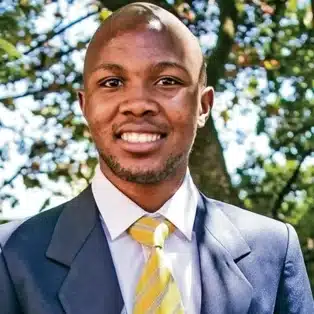 Dr Mzwanele is a Senior Researcher supporting South Africa’s G20 Sherpa with policy research. He holds a PhD in Economics from the University of Birmingham and an MSc from the University of the Witwatersrand. His work covers open macroeconomics, trade, finance, and higher education policy, and he has published widely on inequality, unemployment, household debt and higher education curriculum reform.
 Kamal is the Project Lead for IEJ’s G20 work, focusing on sovereign debt and development finance. He holds a BComm (Hons) in Applied Development Economics from the University of the Witwatersrand and an Erasmus Mundus Joint Masters in Economic Policies for the Global Transition. He has worked with SCIS, UNCTAD and co-founded Rethinking Economics for Africa.