
The Institute for Economic Justice (IEJ) has published updated research on the expected revenue shortfalls and expenditure overruns faced by the South Africa government, and proposed ways of handling these. The updated research shows better than expected revenue collection in August, but continuing government overspend. IEJ offers avenues for closing the gap.
IEJ Executive Director, Dr Gilad Isaacs, explains : “Our analysis shows that the much-discussed revenue shortfall is within historical norms and well within the government’s ability to close. The data does not support claims that we are standing on the edge of a so-called ‘fiscal cliff’ or ‘financial crisis’. Steps can be taken to deal with these budget mismatches without resorting to rushed and chaotic budget cuts.”
The state of the nation’s finances
The IEJ estimates an updated revenue shortfall of R52.4 billion if no changes are made for the rest of 2023/24. This is within historical norms. In 2017/18, 2018/19, and 2019/20 revenue shortfalls ranged from R58.2 to R70.1 billion.
An expenditure overrun of between R67.9 and R105.8 billion is projected for 2023/24 based on current trends. The largest share of this is R37.5 billion from the predictable but unbudgeted public sector wage bill increase. The overspend is a little higher than other years and the revenue shortfall and expenditure overspend compound one another.
National Treasury should have budgeted for items included in the overspend and if this overspend is a ‘crisis’ then it is one entirely of National Treasury’s own making.
Together, these bring the projected budget deficit to 6.29%, similar to the 2019/20 level.
The IEJ research finds that South Africa’s current debt levels should not be characterised as being at ‘crisis’ proportions. The country’s debt-to-GDP ratio (at 71.4% in 2022/23) is in line with the emerging market and middle-income country average (of 69% in 2022/23). However, the debt trajectory is of concern if there is no credible growth strategy. The critical issue facing South Africa’s borrowing is the cost of debt – that is high interest rates – combined with a lack of effective growth strategy.
While the acute budget mismatches can be relatively easily managed, repeated revenue shortfalls and expenditure overruns would be unsustainable over the medium term. The only credible strategy to tackle debt levels is through economic expansion.
Viable alternatives to frantic cuts
The rushed and indiscriminate budget cuts currently being pushed through by National Treasury will cause economic contraction. Recent research shows that fiscal contraction larger than 1.5% of GDP generates a negative effect of more than 3% on GDP even after 15 years. The drop in GDP reaches 5.5% for fiscal contractions larger than 3%.
The IEJ’s research suggests that these budget mismatches and the further pressures on the horizon provide an opportunity for the fundamental reform of South Africa’s fiscal framework in order to centre the role and potential of the budget in advancing developmental priorities. Such a strategy should:
- Solve the immediate budget mismatch:
- Use some of the R459 billion owed to the South African government in the Reserve Bank’s somewhat obscure Gold and Foreign Exchange Contingency Reserve Account. This is in keeping with other major central banks remitting profits to their respective Treasuries.
- Increase short-term borrowing. Even if the entire mismatch was closed in this way it would increase the gross debt-to-GDP ratio by approximately two percentage points only. In this scenario the debt trajectory would still be considerably lower than Treasury’s own debt-to-GDP forecasts from 2019, 2020, and 2021.
- Raise additional revenue:
- In the short-term raise revenue through: the removal of tax breaks for high-income earners; the removal of selected tax breaks for corporates; and restoring the corporate income tax rate to 28%. Removing tax breaks for those earning above R750 000 (around 2.9% of the working population) would alone raise an estimated R83 billion.
- Explore raising additional taxes through: increased taxation on wealth and income from financial assets; tackling illicit financial flows; and capturing rents and windfalls.
- A general increase in the VAT rate would make the tax mix more regressive, fail to raise the sums needed, and disproportionately burden poor and low-income earners. The only VAT increase that would be defensible would be the introduction of a higher VAT rate on luxuries.
- Reduce the cost of borrowing:
- Shift some borrowing from expensive ultra-long-term debt to cheaper medium-term debt.
- Engage in targeted debt renegotiation, particularly for Eskom debt restructuring.
- Apply preferential or prescribed lending to secure cost-effective domestic debt.
- Reduce interest rates through targeted capital management techniques.
- Institute a considered, transparent, consultative, and evidence based expenditure review process.
Protect and advance rights and public services
While South Africa does face fiscal challenges, National Treasury seems determined to force through spending cuts and to terminate or limit programmes it is opposed to – including the highly-successful Social Relief of Distress (SRD) grant and the Presidential Employment Initiative.
Zimbali Mncube, IEJ Tax and Budget Policy Researcher and co-author of the IEJ Policy Brief, frames the politics currently at play as follows: “In emphasising a ‘crisis’, National Treasury looks set to force through chaotic, dire, and ultimately deadly austerity measures across the board. The IEJ’s research takes the fiscal challenges faced seriously, but shows real alternatives on how they can be handled in the short term to avoid a social crisis, while putting in place the necessary plans to leverage the budget to achieve sustainable growth.”
[ENDS]
For further comment:
Dalli Weyers | IEJ Advocacy and Communications Manager | dalli.weyers@iej.org.za | 082 460 2093
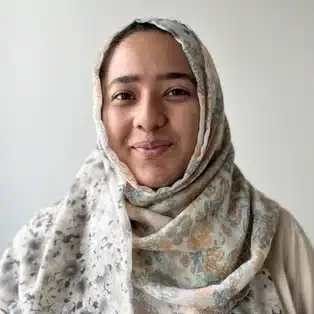 Amaarah is a Junior Programme Officer in the Rethinking Economics for Africa project. She is currently studying towards her Masters in Applied Development Economics at Wits University.
 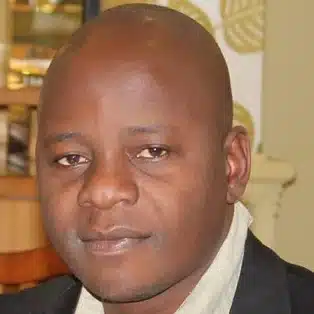 Dr James Musonda is the Senior Researcher on the Just Energy Transition at the IEJ. He is also the Principal Investigator for the Just Energy Transition: Localisation, Decent Work, SMMEs, and Sustainable Livelihoods project, covering South Africa, Ghana, and Kenya.
 Dr Basani Baloyi is a Co-Programme Director at the IEJ. She is a feminist, development economist and activist. She gained her research experience while working on industrial policy issues in academia, at the Centre For Competition, Regulation and Economic Development (CCRED) and Corporate Strategy and Industrial Development (CSID) Unit.
 Dr Andrew Bennie is Senior Researcher in Climate Policy and Food Systems at the IEJ. He has extensive background in academic and civil society research, organising, and activism. Andrew has an MA in Development and Environmental Sociology, and a PhD in Sociology on food politics, the agrarian question, and collective action in South Africa, both from the University of the Witwatersrand.
 Juhi holds a Bachelor of Arts degree in International Relations and Sociology from Wits University and an Honours degree in Development Studies from the University of Cape Town. Her current research focus is on social care regimes in the South African context, with a particular focus on state responses to Early Childhood Development and Long-Term Care for older persons during the COVID-19 pandemic. Her other research areas include feminist economics, worlds of work and the care economy.
 Bandile Ngidi is the Programme Officer for Rethinking Economics for Africa. Bandile has previously worked at the National Minimum Wage Research Initiative and Oxfam South Africa. He holds a Masters in Development Theory and Policy from Wits University. He joined the IEJ in August 2018. Bandile is currently working on incubating the Rethinking Economics for Africa movement (working with students, academics and broader civil society).
  Liso Mdutyana has a BCom in Philosophy and Economics, an Honours in Applied Development Economics, and a Masters in Applied Development Economics from Wits University. His areas of interest include political economy, labour markets, technology and work, and industrial policy. Through his work Liso aims to show the possibility and necessity of economic development that prioritises human wellbeing for everyone.
 Joan Stott holds a Bachelor of Business Science in Economics and a Master’s in Economics from Rhodes University. She brings to the IEJ a wealth of experience in public finance management, policy development, institutional capacity-building, and advancing socioeconomic and fiscal justice.
 Siyanda Baduza is a Junior Basic Income Researcher at IEJ. He holds a BSc in Economics and Mathematics, an Honours degree in Applied Development Economics, and is currently completing a Master’s degree in Applied Development Economics at the University of the Witwatersrand. Siyanda’s research focuses on the impacts of social grants on wellbeing, with a particular focus on the gendered dynamics of this impact. His interests include applied micro-economics, policy impact evaluation, labour markets, gender economics, and political economy. He is passionate about translating economic research into impactful policy.
 Shikwane is a Junior Programme Officer at IEJ focusing on civil society support and global governance in the G20. He has a background in legal compliance, IT contracting and student activism. He holds degrees in Political Studies and International Relations, as well as an LLB, from the University of the Witwatersrand.
 Dr Tsega is a Senior Researcher focusing on Women’s Economic Empowerment within the G20. She examines gender equity in economic policy, with expertise in food systems and small enterprise development. She holds a PhD in development studies from the University of the Western Cape, an MA in Development Economics, and degrees in Development Studies and Economics from UNISA and Addis Ababa University.
 Nerissa is a G20 Junior Researcher at IEJ, focusing on advancing civil society priorities within the G20 framework. She bridges data, research, and policy to advance inclusive economic frameworks. She is completing a Master’s in Data Science (e-Science) at the University of the Witwatersrand, and holds Honours and Bachelor’s Degrees in International Relations with distinction. She has worked as a Research Fellow at SAIIA and a Visiting Research Fellow at Ipea in Brazil.
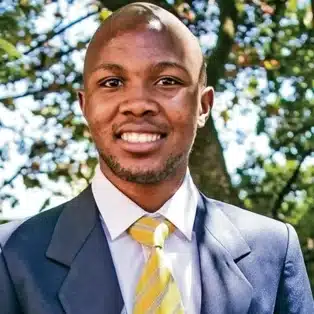 Dr Mzwanele is a Senior Researcher supporting South Africa’s G20 Sherpa with policy research. He holds a PhD in Economics from the University of Birmingham and an MSc from the University of the Witwatersrand. His work covers open macroeconomics, trade, finance, and higher education policy, and he has published widely on inequality, unemployment, household debt and higher education curriculum reform.
 Kamal is the Project Lead for IEJ’s G20 work, focusing on sovereign debt and development finance. He holds a BComm (Hons) in Applied Development Economics from the University of the Witwatersrand and an Erasmus Mundus Joint Masters in Economic Policies for the Global Transition. He has worked with SCIS, UNCTAD and co-founded Rethinking Economics for Africa.