
Delegates from G20 member states, guest countries, and international organisations convened in Johannesburg under South Africa’s G20 Presidency to negotiate the Ministerial Declaration of the G20 Empowerment of Women Working Group (EWWG). Established under India’s Presidency in 2023 and advanced by Brazil in 2024, the Working Group represents a critical platform to drive coordinated global action on gender equality and the empowerment of all women and girls. Its mandate aligns closely with the 2030 Agenda for Sustainable Development, recognising that gender equality is not only a human right but a foundation for inclusive and sustainable growth.
Under South Africa’s Presidency, the G20 EWWG placed the care economy, the financial inclusion of women, and the eradication of gender-based violence and femicide (GBVF) at the centre of its agenda. This integrated focus recognised that these priorities are interdependent and mutually reinforcing, that women’s full, equal, and meaningful economic participation cannot be realised while care work remains undervalued, financial systems remain exclusionary, and violence against women persists.
Throughout South Africa’s Presidency of the G20, the EWWG convened four technical meetings bringing together stakeholders from government, international organisations, and civil society, alongside multiple side events aimed at broadening engagement and promoting knowledge exchange. The Working Group produced a robust suite of knowledge products, including a series of policy briefs on the three key priorities; an Action Plan and Measurement Framework (2025–2030) on financial inclusion; and a series of abstracts on promoting women’s entrepreneurship and gender equality compiled in a book. Through this holistic and evidence-based approach, the EWWG sought to promote shared responsibility for care across the state, market, and households; expand women’s access to finance and entrepreneurship opportunities; and strengthen accountability and prevention mechanisms to eliminate GBVF.
As an official resource partner to the South African G20 Sherpa, the Institute for Economic Justice (IEJ) has played a critical role in supporting the EWWG’s agenda. The IEJ contributed to the conceptualisation and co-organisation of side events in collaboration with the Department of Women, Youth and Persons with Disabilities (DWYPD), and produced three policy briefs on care. These efforts ensured that South Africa’s Presidency foregrounded feminist economic perspectives and evidence-based policymaking.
Despite these coordinated efforts, the EWWG was unable to reach consensus on its final ministerial declaration. Unlike the United Nations (UN), where resolutions can be passed based on votes, the nature of consensus-based negotiations in the G20 means that every country essentially has a veto, and it only takes one country to block consensus. Following the ever-growing gains of far-right, patriarchal, and conservative movements globally, a backlash against progressive gender norms has intensified, framing gender equality as a threat to family, tradition, and national identity. This has led to the regression of institutional mechanisms, constrained civic space for advocacy, and an inability for G20 countries to reach consensus.
During negotiations, this backlash was most clearly reflected in the position taken by one country in particular, which maintained extensive and sustained reservations across the text. This country opposed the inclusion of key established women’s-rights framings, G20 agreed language and other multilateral agreed text, such as UN resolutions, and terminology, objecting to references to “gender” as well as “unpaid care” throughout the text. This country requested that these terms be replaced by “sex-based” terminology. This position departs from three decades of international consensus established through the Beijing Platform for Action (BPfA), the Convention on the Elimination of All Forms of Discrimination against Women (CEDAW), and G20 Declarations in other working groups and task forces.
While some other delegations expressed reservations regarding specific terms, most notably “sexual and reproductive health” and “reproductive rights”, there was a general willingness among the majority to compromise and reach agreement. After extensive negotiations spanning hundreds of hours, consensus could not be achieved due to one country’s reservations, despite broad-based agreement among the other 18 G20 member states present. Consequently, a Chair’s Statement was issued instead of a joint G20 Ministerial Declaration.
This breakdown reflects the deepening global divide on women’s rights and the fragility of progress on gender equality. Gains once regarded as irreversible wins, including recognition of unpaid care, protection from gender-based violence, access to sexual and reproductive health, and bodily autonomy, are now under threat amid resurgent conservatism, shrinking fiscal space, and mounting challenges to democracy. The G20’s failure to agree on a shared commitment to women’s empowerment underscores a critical juncture: the erosion of global consensus at a time when sustained transformative action is most urgently required to advance gender equality.
The IEJ recognises that this backlash is not a fleeting culture war but part of a systemic contest over rights, democracy, and social justice, driven by ultra-conservative and far-right mobilisation. In this context, retreating from commitments to gender equality would mean abandoning a global responsibility to all women and girls. The lesson is clear: hard-won gains can be boldly and swiftly erased if they are not actively defended and sustained by social movements and democratic contestation.
Globally, women continue to face deep structural barriers that limit their full, equal and meaningful participation in social, political, and economic life. According to the International Labour Organization (ILO) women perform 76.2 per cent of the total amount of unpaid care work, more than three times as much as men (23.8 per cent). This care, whether raising children, collecting water, securing electricity or maintaining households, is the invisible infrastructure upon which all economies are built. In South Africa, for every one man unable to participate in the labour market because of unpaid care work, there are approximately eight women in the same position (Stats SA, 2025). Evidence shows that unpaid care work is among the main barriers to women’s participation in paid work and public life (ILO, 2018). Unpaid care work becomes a barrier not only because it is time and labour-intensive, but because societies, employers, and firms rely on it to meet their workforce and profit needs, while failing to adequately incorporate policies, systems, and workplace arrangements that support or redistribute it. This contradiction reveals a broader societal logic in which dependency and interconnection, conditions that define human life, are undervalued and treated as an aberration.
At the same time, nearly 1.4 billion adults remain financially excluded globally, with women disproportionately affected, a disparity that reinforces gendered poverty and limits pathways to autonomy. In addition, GBVF continues at alarming levels, according to the WHO, about one in three women worldwide have been subjected to either physical and/or sexual intimate partner violence or non-partner sexual violence in their lifetime, and one in five, partnered women have experienced physical violence by a partner in their lifetime in South Africa. These overlapping realities, care burdens, financial exclusion, and violence reflect a social order that continues to privilege the individualistic self-interest of those in power over collective well-being and fundamental human rights.
With consensus not reached, the stakes for the G20 EWWG could not be higher. As one of the few remaining multilateral spaces dedicated to advancing gender equality, the Working Group’s ability to maintain shared purpose is essential for accountability, standard-setting, and collective progress. The absence of consensus represents more than a procedural impasse; it signals a deep fracture in the global architecture for women’s rights and threatens the continuity of feminist policy cooperation within the G20, and the G20’s core mandate of stable, inclusive, and sustainable economic growth.
Nevertheless, the G20 process remains instructive. It underscores the importance of institutionalising progress so that hard-won gains are safeguarded from shifts in political priorities. Encouragingly, many Ministers affirmed their support for the development of National Care Strategies by 2030, a milestone that represents both a policy and moral imperative. The Institute for Economic Justice remains firmly committed to advancing this goal through its Care Economies Project.
At this critical moment, the IEJ stands in solidarity with all women and girls worldwide, across race, class, ethnicity, ability, age, sexual orientation, gender identity, and migration status, reaffirming our commitment to defending their rights and ensuring access to full, thriving, and meaningful lives. The IEJ will continue to support the G20 women’s empowerment agenda through rigorous research, advocacy, and strategic partnerships.
[ENDS]
For media inquiries, please contact:
Dalli Weyers | dalli.weyers@iej.org.za | 082 460 2093
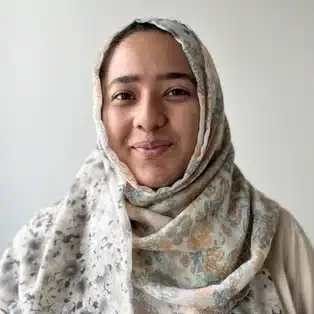 Amaarah is a Junior Programme Officer in the Rethinking Economics for Africa project. She is currently studying towards her Masters in Applied Development Economics at Wits University.
 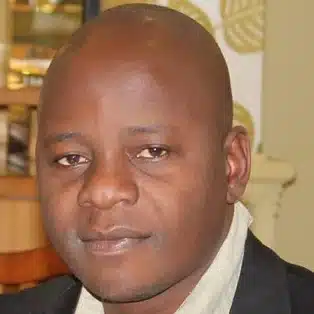 Dr James Musonda is the Senior Researcher on the Just Energy Transition at the IEJ. He is also the Principal Investigator for the Just Energy Transition: Localisation, Decent Work, SMMEs, and Sustainable Livelihoods project, covering South Africa, Ghana, and Kenya.
 Dr Basani Baloyi is a Co-Programme Director at the IEJ. She is a feminist, development economist and activist. She gained her research experience while working on industrial policy issues in academia, at the Centre For Competition, Regulation and Economic Development (CCRED) and Corporate Strategy and Industrial Development (CSID) Unit.
 Dr Andrew Bennie is Senior Researcher in Climate Policy and Food Systems at the IEJ. He has extensive background in academic and civil society research, organising, and activism. Andrew has an MA in Development and Environmental Sociology, and a PhD in Sociology on food politics, the agrarian question, and collective action in South Africa, both from the University of the Witwatersrand.
 Juhi holds a Bachelor of Arts degree in International Relations and Sociology from Wits University and an Honours degree in Development Studies from the University of Cape Town. Her current research focus is on social care regimes in the South African context, with a particular focus on state responses to Early Childhood Development and Long-Term Care for older persons during the COVID-19 pandemic. Her other research areas include feminist economics, worlds of work and the care economy.
 Bandile Ngidi is the Programme Officer for Rethinking Economics for Africa. Bandile has previously worked at the National Minimum Wage Research Initiative and Oxfam South Africa. He holds a Masters in Development Theory and Policy from Wits University. He joined the IEJ in August 2018. Bandile is currently working on incubating the Rethinking Economics for Africa movement (working with students, academics and broader civil society).
  Liso Mdutyana has a BCom in Philosophy and Economics, an Honours in Applied Development Economics, and a Masters in Applied Development Economics from Wits University. His areas of interest include political economy, labour markets, technology and work, and industrial policy. Through his work Liso aims to show the possibility and necessity of economic development that prioritises human wellbeing for everyone.
 Joan Stott holds a Bachelor of Business Science in Economics and a Master’s in Economics from Rhodes University. She brings to the IEJ a wealth of experience in public finance management, policy development, institutional capacity-building, and advancing socioeconomic and fiscal justice.
 Siyanda Baduza is a Junior Basic Income Researcher at IEJ. He holds a BSc in Economics and Mathematics, an Honours degree in Applied Development Economics, and is currently completing a Master’s degree in Applied Development Economics at the University of the Witwatersrand. Siyanda’s research focuses on the impacts of social grants on wellbeing, with a particular focus on the gendered dynamics of this impact. His interests include applied micro-economics, policy impact evaluation, labour markets, gender economics, and political economy. He is passionate about translating economic research into impactful policy.
 Shikwane is a Junior Programme Officer at IEJ focusing on civil society support and global governance in the G20. He has a background in legal compliance, IT contracting and student activism. He holds degrees in Political Studies and International Relations, as well as an LLB, from the University of the Witwatersrand.
 Dr Tsega is a Senior Researcher focusing on Women’s Economic Empowerment within the G20. She examines gender equity in economic policy, with expertise in food systems and small enterprise development. She holds a PhD in development studies from the University of the Western Cape, an MA in Development Economics, and degrees in Development Studies and Economics from UNISA and Addis Ababa University.
 Nerissa is a G20 Junior Researcher at IEJ, focusing on advancing civil society priorities within the G20 framework. She bridges data, research, and policy to advance inclusive economic frameworks. She is completing a Master’s in Data Science (e-Science) at the University of the Witwatersrand, and holds Honours and Bachelor’s Degrees in International Relations with distinction. She has worked as a Research Fellow at SAIIA and a Visiting Research Fellow at Ipea in Brazil.
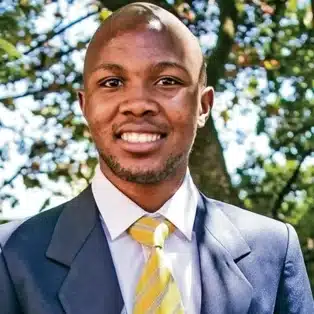 Dr Mzwanele is a Senior Researcher supporting South Africa’s G20 Sherpa with policy research. He holds a PhD in Economics from the University of Birmingham and an MSc from the University of the Witwatersrand. His work covers open macroeconomics, trade, finance, and higher education policy, and he has published widely on inequality, unemployment, household debt and higher education curriculum reform.
 Kamal is the Project Lead for IEJ’s G20 work, focusing on sovereign debt and development finance. He holds a BComm (Hons) in Applied Development Economics from the University of the Witwatersrand and an Erasmus Mundus Joint Masters in Economic Policies for the Global Transition. He has worked with SCIS, UNCTAD and co-founded Rethinking Economics for Africa.