
Author: Zimbali Mncube
Navigating Wealth Taxation: Insights from theory to global practices
The debate on taxing wealth is intensifying as governments seek sustainable revenue to address inequality, climate change, and social security gaps. South Africa, one of the world’s most unequal nations, faces urgent calls for wealth taxes, with the richest 0.1% owning 25% of national wealth. Yet, capital income remains undertaxed, and GDP growth stagnates at 0.8%.
International experiences demonstrate that wealth taxes, such as financial transaction taxes (FTTs), dividend taxes, and net wealth taxes, can generate significant revenue without stifling growth. For example:
- Argentina’s solidarity wealth tax (2%–3.5%) raised $2.4 billion from just 12,500 individuals during Covid-19.
- Belgium’s FTT contributes 2.4% of annual tax revenue via low-rate levies on stocks and bonds.
- France’s dividend tax hike (15.5% to 46%) boosted corporate investment by 15%, debunking myths about economic harm.
Critics argue that wealth taxes risk capital flight or administrative complexity. However, success hinges on strong enforcement, international coordination, and progressive design:
- Low, tiered rates (e.g., 0.5%–1.5% on net wealth) balance revenue and fairness.
- Closing loopholes via third-party reporting and tax amnesties, as seen in Colombia and Argentina.
- Ring-fencing revenue for social spending (e.g., pensions, healthcare) to bolster public trust.
For South Africa, we recommend:
- Expanding capital income taxes with progressive rates.
- Raising dividend taxes (currently 20%) toward the OECD average of 24%.
- Introducing an FTT (0.1%–0.3%) to curb speculation and raise ~R19 billion annually.
- Implementing a net wealth tax (moderate thresholds, minimal exemptions).
Key precondition: Strengthen SARS’ capacity, enforce capital controls, and leverage UN tax frameworks to prevent evasion.
Wealth taxation isn’t just revenue, it’s a tool to reduce inequality and fund inclusive growth. The time for reform is now.
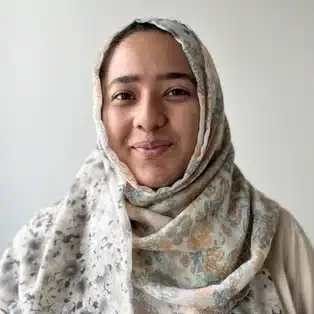 Amaarah is a Junior Programme Officer in the Rethinking Economics for Africa project. She is currently studying towards her Masters in Applied Development Economics at Wits University.
 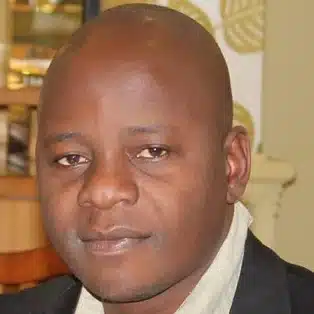 Dr James Musonda is the Senior Researcher on the Just Energy Transition at the IEJ. He is also the Principal Investigator for the Just Energy Transition: Localisation, Decent Work, SMMEs, and Sustainable Livelihoods project, covering South Africa, Ghana, and Kenya.
 Dr Basani Baloyi is a Co-Programme Director at the IEJ. She is a feminist, development economist and activist. She gained her research experience while working on industrial policy issues in academia, at the Centre For Competition, Regulation and Economic Development (CCRED) and Corporate Strategy and Industrial Development (CSID) Unit.
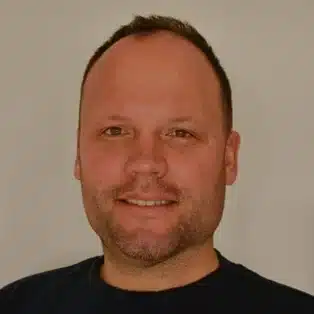 Dr Andrew Bennie is Senior Researcher in Climate Policy and Food Systems at the IEJ. He has extensive background in academic and civil society research, organising, and activism. Andrew has an MA in Development and Environmental Sociology, and a PhD in Sociology on food politics, the agrarian question, and collective action in South Africa, both from the University of the Witwatersrand.
 Juhi holds a Bachelor of Arts degree in International Relations and Sociology from Wits University and an Honours degree in Development Studies from the University of Cape Town. Her current research focus is on social care regimes in the South African context, with a particular focus on state responses to Early Childhood Development and Long-Term Care for older persons during the COVID-19 pandemic. Her other research areas include feminist economics, worlds of work and the care economy.
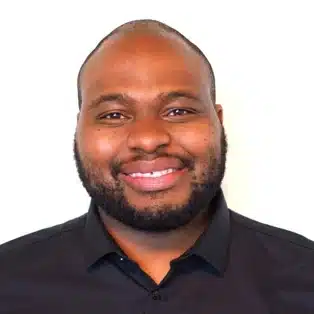 Bandile Ngidi is the Programme Officer for Rethinking Economics for Africa. Bandile has previously worked at the National Minimum Wage Research Initiative and Oxfam South Africa. He holds a Masters in Development Theory and Policy from Wits University. He joined the IEJ in August 2018. Bandile is currently working on incubating the Rethinking Economics for Africa movement (working with students, academics and broader civil society).
  Liso Mdutyana has a BCom in Philosophy and Economics, an Honours in Applied Development Economics, and a Masters in Applied Development Economics from Wits University. His areas of interest include political economy, labour markets, technology and work, and industrial policy. Through his work Liso aims to show the possibility and necessity of economic development that prioritises human wellbeing for everyone.
 Joan Stott holds a Bachelor of Business Science in Economics and a Master’s in Economics from Rhodes University. She brings to the IEJ a wealth of experience in public finance management, policy development, institutional capacity-building, and advancing socioeconomic and fiscal justice.
 Siyanda Baduza is a Junior Basic Income Researcher at IEJ. He holds a BSc in Economics and Mathematics, an Honours degree in Applied Development Economics, and is currently completing a Master’s degree in Applied Development Economics at the University of the Witwatersrand. Siyanda’s research focuses on the impacts of social grants on wellbeing, with a particular focus on the gendered dynamics of this impact. His interests include applied micro-economics, policy impact evaluation, labour markets, gender economics, and political economy. He is passionate about translating economic research into impactful policy.
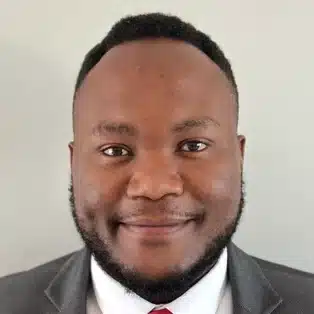 Shikwane is a Junior Programme Officer at IEJ focusing on civil society support and global governance in the G20. He has a background in legal compliance, IT contracting and student activism. He holds degrees in Political Studies and International Relations, as well as an LLB, from the University of the Witwatersrand.
 Dr Tsega is a Senior Researcher focusing on Women’s Economic Empowerment within the G20. She examines gender equity in economic policy, with expertise in food systems and small enterprise development. She holds a PhD in development studies from the University of the Western Cape, an MA in Development Economics, and degrees in Development Studies and Economics from UNISA and Addis Ababa University.
 Nerissa is a G20 Junior Researcher at IEJ, focusing on advancing civil society priorities within the G20 framework. She bridges data, research, and policy to advance inclusive economic frameworks. She is completing a Master’s in Data Science (e-Science) at the University of the Witwatersrand, and holds Honours and Bachelor’s Degrees in International Relations with distinction. She has worked as a Research Fellow at SAIIA and a Visiting Research Fellow at Ipea in Brazil.
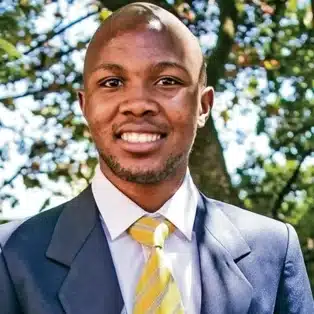 Dr Mzwanele is a Senior Researcher supporting South Africa’s G20 Sherpa with policy research. He holds a PhD in Economics from the University of Birmingham and an MSc from the University of the Witwatersrand. His work covers open macroeconomics, trade, finance, and higher education policy, and he has published widely on inequality, unemployment, household debt and higher education curriculum reform.
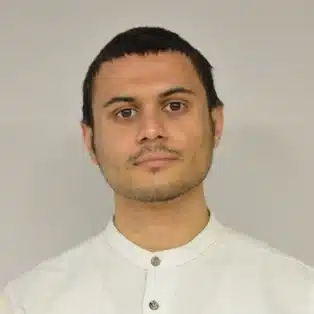 Kamal is the Project Lead for IEJ’s G20 work, focusing on sovereign debt and development finance. He holds a BComm (Hons) in Applied Development Economics from the University of the Witwatersrand and an Erasmus Mundus Joint Masters in Economic Policies for the Global Transition. He has worked with SCIS, UNCTAD and co-founded Rethinking Economics for Africa.