
Why Wealth Taxes Matter in South Africa
South Africa is one of the most unequal countries in the world. A small elite controls a disproportionate share of national wealth, while poverty and hunger affect millions. At the same time, fiscal constraints and austerity have limited the state’s ability to realise socioeconomic rights. This policy brief argues that taxing wealth is both an equitable and necessary tool to address these challenges.
Do Wealth Taxes Harm Growth?
Conventional economic arguments suggest that taxing wealth discourages saving and investment. However, Keynesian theory and empirical evidence challenge this view. Investment is driven primarily by demand and credit creation, not by accumulated savings. Redirecting wealth towards public spending and redistribution can raise demand, stimulate investment, and support employment.
Policy Options: What Does the Evidence Show?
The brief assesses three key instruments:
- Financial Transaction Taxes (FTTs): Low-rate taxes on the trading of financial assets can curb speculative activity, reduce volatility, and generate meaningful revenue. International examples, including France, show positive stability effects.
- Dividend Taxes: Evidence from France demonstrates that higher dividend taxes can increase reinvestment, employment, and wages, while tax cuts in the US and Canada failed to boost investment.
- Net Wealth Taxes: Countries such as Argentina, Colombia, Norway, Spain, and Switzerland have successfully implemented net wealth taxes, often during crises, raising between 0.2% and 1.5% of GDP.
Feasibility and Administration
While concerns remain about administrative capacity, the brief highlights existing infrastructure within SARS, including the High Wealth Individual Unit, and international guidance from the UN. Experiences from Argentina and Colombia underline the importance of strong enforcement, asset registries, and international cooperation to limit avoidance.
Conclusions and Recommendations
Wealth taxes can raise substantial revenue, reduce inequality, and enhance economic stability—if properly designed. The IEJ recommends expanding taxes on income from wealth, increasing dividend taxes, introducing an FTT, and implementing a moderate, progressive net wealth tax. These measures must be accompanied by anti-corruption efforts, strengthened enforcement, and sustained international cooperation.
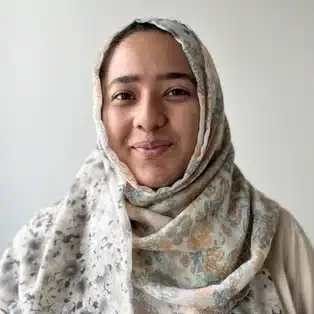 Amaarah is a Junior Programme Officer in the Rethinking Economics for Africa project. She is currently studying towards her Masters in Applied Development Economics at Wits University.
 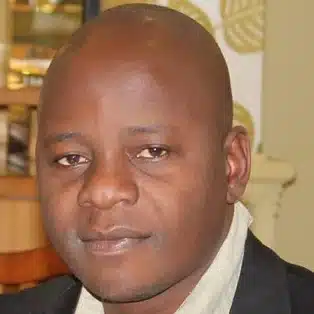 Dr James Musonda is the Senior Researcher on the Just Energy Transition at the IEJ. He is also the Principal Investigator for the Just Energy Transition: Localisation, Decent Work, SMMEs, and Sustainable Livelihoods project, covering South Africa, Ghana, and Kenya.
 Dr Basani Baloyi is a Co-Programme Director at the IEJ. She is a feminist, development economist and activist. She gained her research experience while working on industrial policy issues in academia, at the Centre For Competition, Regulation and Economic Development (CCRED) and Corporate Strategy and Industrial Development (CSID) Unit.
 Dr Andrew Bennie is Senior Researcher in Climate Policy and Food Systems at the IEJ. He has extensive background in academic and civil society research, organising, and activism. Andrew has an MA in Development and Environmental Sociology, and a PhD in Sociology on food politics, the agrarian question, and collective action in South Africa, both from the University of the Witwatersrand.
 Juhi holds a Bachelor of Arts degree in International Relations and Sociology from Wits University and an Honours degree in Development Studies from the University of Cape Town. Her current research focus is on social care regimes in the South African context, with a particular focus on state responses to Early Childhood Development and Long-Term Care for older persons during the COVID-19 pandemic. Her other research areas include feminist economics, worlds of work and the care economy.
 Bandile Ngidi is the Programme Officer for Rethinking Economics for Africa. Bandile has previously worked at the National Minimum Wage Research Initiative and Oxfam South Africa. He holds a Masters in Development Theory and Policy from Wits University. He joined the IEJ in August 2018. Bandile is currently working on incubating the Rethinking Economics for Africa movement (working with students, academics and broader civil society).
  Liso Mdutyana has a BCom in Philosophy and Economics, an Honours in Applied Development Economics, and a Masters in Applied Development Economics from Wits University. His areas of interest include political economy, labour markets, technology and work, and industrial policy. Through his work Liso aims to show the possibility and necessity of economic development that prioritises human wellbeing for everyone.
 Joan Stott holds a Bachelor of Business Science in Economics and a Master’s in Economics from Rhodes University. She brings to the IEJ a wealth of experience in public finance management, policy development, institutional capacity-building, and advancing socioeconomic and fiscal justice.
 Siyanda Baduza is a Junior Basic Income Researcher at IEJ. He holds a BSc in Economics and Mathematics, an Honours degree in Applied Development Economics, and is currently completing a Master’s degree in Applied Development Economics at the University of the Witwatersrand. Siyanda’s research focuses on the impacts of social grants on wellbeing, with a particular focus on the gendered dynamics of this impact. His interests include applied micro-economics, policy impact evaluation, labour markets, gender economics, and political economy. He is passionate about translating economic research into impactful policy.
 Shikwane is a Junior Programme Officer at IEJ focusing on civil society support and global governance in the G20. He has a background in legal compliance, IT contracting and student activism. He holds degrees in Political Studies and International Relations, as well as an LLB, from the University of the Witwatersrand.
 Dr Tsega is a Senior Researcher focusing on Women’s Economic Empowerment within the G20. She examines gender equity in economic policy, with expertise in food systems and small enterprise development. She holds a PhD in development studies from the University of the Western Cape, an MA in Development Economics, and degrees in Development Studies and Economics from UNISA and Addis Ababa University.
 Nerissa is a G20 Junior Researcher at IEJ, focusing on advancing civil society priorities within the G20 framework. She bridges data, research, and policy to advance inclusive economic frameworks. She is completing a Master’s in Data Science (e-Science) at the University of the Witwatersrand, and holds Honours and Bachelor’s Degrees in International Relations with distinction. She has worked as a Research Fellow at SAIIA and a Visiting Research Fellow at Ipea in Brazil.
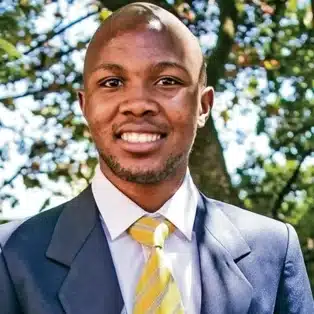 Dr Mzwanele is a Senior Researcher supporting South Africa’s G20 Sherpa with policy research. He holds a PhD in Economics from the University of Birmingham and an MSc from the University of the Witwatersrand. His work covers open macroeconomics, trade, finance, and higher education policy, and he has published widely on inequality, unemployment, household debt and higher education curriculum reform.
 Kamal is the Project Lead for IEJ’s G20 work, focusing on sovereign debt and development finance. He holds a BComm (Hons) in Applied Development Economics from the University of the Witwatersrand and an Erasmus Mundus Joint Masters in Economic Policies for the Global Transition. He has worked with SCIS, UNCTAD and co-founded Rethinking Economics for Africa.