
Across Africa, more money is spent on repaying debt than on keeping children in school or hospitals running. As food prices rise and the climate crisis deepens, millions of families are struggling to survive while global leaders debate, rather than take bold action.
As South Africa hosts the G20 for the first time in history, the Institute for Economic Justice (IEJ) is calling on world leaders to choose people-centred development over the pursuit of profit.
The IEJ demands bold, people-centred reform to confront a global economic architecture that continues to fail the majority of people and the planet. It calls for urgent action on debt justice, tax fairness and equity, food security, care economy, and climate finance, all pillars of an economy that prioritises dignity over greed.
Kamal Ramburuth, G20 Project Lead at the IEJ, says, “This is a defining moment in history for Africa. For the first time, the world’s most powerful economies are meeting on African soil, and that gives us an opportunity to reshape the global economic agenda in a way that finally reflects our realities, our priorities, and our values.”
“The G20 cannot continue to make decisions for the Global South without the Global South. South Africa’s Presidency must be the turning point that secures Africa’s economic future through debt justice, fair taxation, universal social protection, and a just transition to sustainable energy,” he says.
“At the Institute for Economic Justice, our mission has always been to ensure that economic policy serves people, not profit. This G20 moment must be about more than diplomacy; it must be about dignity, equality and justice for all Africans,” explains Ramburuth.
A continent bearing the burden
57% of Africans live in countries that spend more on debt servicing than on healthcare or education. Food insecurity now affects nearly one in three people, and climate impacts are erasing decades of progress. African women perform billions of hours of unpaid care work every day, work that keeps economies running but goes unrewarded while also excluding women from full, equal, and meaningful participation in the economy.
The IEJ argues that South Africa’s G20 Presidency is the first chance in decades for Africa to shape a new social and economic order that works for its people.
The IEJ’s five urgent calls to the G20:
- Debt justice: End exploitative global debt systems that deepen poverty and inequality.
- Tax fairness: Back a UN-led global tax convention to make the super-rich and multinationals pay their fair share.
- Food and social protection: Guarantee that no one goes hungry through investments in buffer stocks (reserves of essential food items that can be drawn on when there are shortages) and universal social floors (basic social protections and support systems accessible to everyone, like food security programmes).
- Climate finance and just transition: Ensure the global energy transition, from fossil fuels to renewable energy, uplifts rather than excludes the Global South.
- Women’s empowerment: Recognise and reduce unpaid care work, redistribute the burden of care work fairly across genders, the private sector and the state.
A voice from the Global South
Ramburuth says, “Africa cannot remain at the periphery of global decision-making. South Africa has a historic responsibility to amplify the voices of the Global South and ensure that global policy aligns with human rights and development justice.”
Through its G20 Factsheet Series, Debt Paper Series, Care Economy research, and new Working Papers on Tax, Food, and Climate, the IEJ is offering evidence-based, people-centred policy solutions for a fairer global economy. This collection is a concise toolkit that provides clear and accessible information on the IEJ’s key issues and can be used to inform and influence policy debates at the summit.
“This G20 cannot be another missed opportunity,” warns Ramburuth. “Global decisions made today will determine whether the next generation inherits a future of justice or despair.”
Policymakers, journalists, and civil society are invited to join the call for an economy that serves people and planet. Follow the conversation using #IEJG20 and access resources at www.iej.org.za/G20
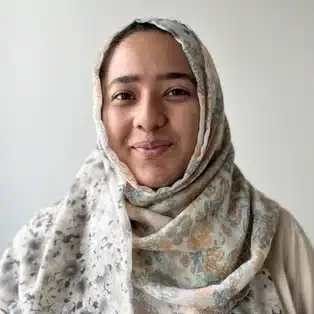 Amaarah is a Junior Programme Officer in the Rethinking Economics for Africa project. She is currently studying towards her Masters in Applied Development Economics at Wits University.
 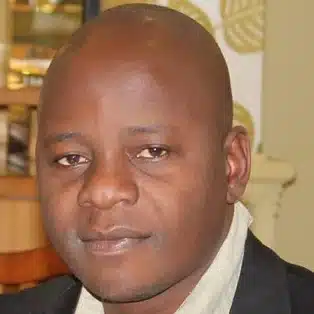 Dr James Musonda is the Senior Researcher on the Just Energy Transition at the IEJ. He is also the Principal Investigator for the Just Energy Transition: Localisation, Decent Work, SMMEs, and Sustainable Livelihoods project, covering South Africa, Ghana, and Kenya.
 Dr Basani Baloyi is a Co-Programme Director at the IEJ. She is a feminist, development economist and activist. She gained her research experience while working on industrial policy issues in academia, at the Centre For Competition, Regulation and Economic Development (CCRED) and Corporate Strategy and Industrial Development (CSID) Unit.
 Dr Andrew Bennie is Senior Researcher in Climate Policy and Food Systems at the IEJ. He has extensive background in academic and civil society research, organising, and activism. Andrew has an MA in Development and Environmental Sociology, and a PhD in Sociology on food politics, the agrarian question, and collective action in South Africa, both from the University of the Witwatersrand.
 Juhi holds a Bachelor of Arts degree in International Relations and Sociology from Wits University and an Honours degree in Development Studies from the University of Cape Town. Her current research focus is on social care regimes in the South African context, with a particular focus on state responses to Early Childhood Development and Long-Term Care for older persons during the COVID-19 pandemic. Her other research areas include feminist economics, worlds of work and the care economy.
 Bandile Ngidi is the Programme Officer for Rethinking Economics for Africa. Bandile has previously worked at the National Minimum Wage Research Initiative and Oxfam South Africa. He holds a Masters in Development Theory and Policy from Wits University. He joined the IEJ in August 2018. Bandile is currently working on incubating the Rethinking Economics for Africa movement (working with students, academics and broader civil society).
  Liso Mdutyana has a BCom in Philosophy and Economics, an Honours in Applied Development Economics, and a Masters in Applied Development Economics from Wits University. His areas of interest include political economy, labour markets, technology and work, and industrial policy. Through his work Liso aims to show the possibility and necessity of economic development that prioritises human wellbeing for everyone.
 Joan Stott holds a Bachelor of Business Science in Economics and a Master’s in Economics from Rhodes University. She brings to the IEJ a wealth of experience in public finance management, policy development, institutional capacity-building, and advancing socioeconomic and fiscal justice.
 Siyanda Baduza is a Junior Basic Income Researcher at IEJ. He holds a BSc in Economics and Mathematics, an Honours degree in Applied Development Economics, and is currently completing a Master’s degree in Applied Development Economics at the University of the Witwatersrand. Siyanda’s research focuses on the impacts of social grants on wellbeing, with a particular focus on the gendered dynamics of this impact. His interests include applied micro-economics, policy impact evaluation, labour markets, gender economics, and political economy. He is passionate about translating economic research into impactful policy.
 Shikwane is a Junior Programme Officer at IEJ focusing on civil society support and global governance in the G20. He has a background in legal compliance, IT contracting and student activism. He holds degrees in Political Studies and International Relations, as well as an LLB, from the University of the Witwatersrand.
 Dr Tsega is a Senior Researcher focusing on Women’s Economic Empowerment within the G20. She examines gender equity in economic policy, with expertise in food systems and small enterprise development. She holds a PhD in development studies from the University of the Western Cape, an MA in Development Economics, and degrees in Development Studies and Economics from UNISA and Addis Ababa University.
 Nerissa is a G20 Junior Researcher at IEJ, focusing on advancing civil society priorities within the G20 framework. She bridges data, research, and policy to advance inclusive economic frameworks. She is completing a Master’s in Data Science (e-Science) at the University of the Witwatersrand, and holds Honours and Bachelor’s Degrees in International Relations with distinction. She has worked as a Research Fellow at SAIIA and a Visiting Research Fellow at Ipea in Brazil.
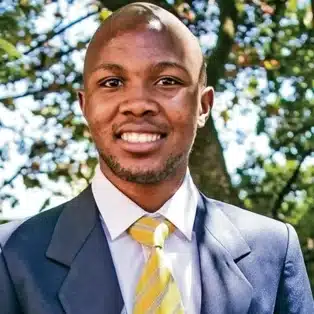 Dr Mzwanele is a Senior Researcher supporting South Africa’s G20 Sherpa with policy research. He holds a PhD in Economics from the University of Birmingham and an MSc from the University of the Witwatersrand. His work covers open macroeconomics, trade, finance, and higher education policy, and he has published widely on inequality, unemployment, household debt and higher education curriculum reform.
 Kamal is the Project Lead for IEJ’s G20 work, focusing on sovereign debt and development finance. He holds a BComm (Hons) in Applied Development Economics from the University of the Witwatersrand and an Erasmus Mundus Joint Masters in Economic Policies for the Global Transition. He has worked with SCIS, UNCTAD and co-founded Rethinking Economics for Africa.