
The Institute for Economic Justice (IEJ) welcomes the decision to reverse the ill-advised VAT hike – a regressive tax that would have disproportionately harmed the poor, low-income workers, and the struggling middle class. We caution that this reversal should not open the door for budget cuts as appears to be the National Treasury’s preference.
There is an overwhelming acceptance by political parties, together with civil society formations, of the importance of protecting essential services from budget cuts going forward. The joint statement from the parties states that “fiscal consolidation must not mean austerity for the vulnerable,” and that “alternatives must preserve the social wage, and enable inclusive economic growth. Treasury, in collaboration with parliament, must continue to ensure sound, equitable and developmental financing.”
This is in stark contrast to the position held by the National Treasury that the removal of the VAT will result in a shortfall of R75 billion over the medium term (incorporating a further 0.5 percentage point increase in 2026/27) and therefore necessitates the proposal of “expenditure adjustments to cover this shortfall in revenue” – a clear indication of its intentions to resort to
budget cuts rather than finding alternative ways to raise revenue.
While begrudgingly conceding on the issue of the VAT hike, the National Treasury and Minister of Finance appears to double down on their ideological rejection of progressive revenue alternatives. This flies in the face of evidence presented in parliament by the IEJ and other civil society organisations, as well as by political parties, which show that many alternatives are readily available. This leads to a false binary that it is either we have a VAT hike or budget cuts.
Their dogmatic adherence to the need for a VAT increase, and their argument that it was impossible to reverse it, also exposes their ideological agenda to impose this on the country, even if it meant creating a political and constitutional crisis. There appears to be no other explanation for this, given that the 0.5% VAT increase, at best, would secure R13.5 billion in revenue, which is a tiny 0.5% of the national budget. It has recently emerged that the revenue overrun collected by SARS (of approximately R9 billion) alone, without further revenue or budget cuts, largely fills this hole.
It also highlights the failure by the National Treasury to find innovative ways to raise revenue that can immediately unlock resources to further finance essential services and expand public
investment.
As parliament takes this forward, the IEJ reiterates the following immediate sources of revenue:
- Tapping into the Gold and Foreign Exchange Reserve Account (GFECRA), which still has over R300 billion available to the government.
- Removing tax breaks for high-income earners (those earning above R1 million per year), such as those linked to pensions or medical aid contributions. The government spent approximately R51 billion on these in 2022/23 (equal to R60.4 billion in 2024/25).
- Raising the Corporate Income Tax rate back to 28%, as the previous reduction to 27% failed to attract investment. This would have raised an extra R12 billion in 2024/25.
Over the medium term, other measures, including a wealth tax, social security tax, and financial transactions tax, are available that could generate significant revenue and reduce inequality.
The Minister and National Treasury have failed to respond to this budget crisis, of their own making, in a way which takes political party and public concerns into account until the very last minute, effectively holding the country to ransom in the process. There is now the fear that they will abuse their power to advance further unnecessary, and damaging budget cuts. The cross-party collective made clear what the IEJ has long maintained: South Africa needs a budget that adequately supports inclusive growth and funds the priorities set out in the Medium-Term Development Plan. The National Treasury can no longer continue to fail on its mandate without any consequences. The President must ensure that there is accountability and consequences for the incompetence and arrogance displayed by the National Treasury and Minister of Finance.
[ENDS]
FOR FURTHER COMMENT:
Given Sigauqwe | IEJ Senior Communications Officer | given.sigauqwe@iej.org.za | 073 988 2870
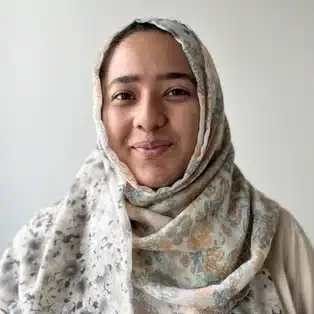 Amaarah is a Junior Programme Officer in the Rethinking Economics for Africa project. She is currently studying towards her Masters in Applied Development Economics at Wits University.
 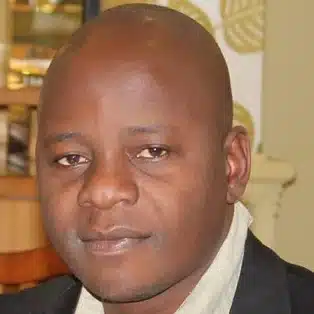 Dr James Musonda is the Senior Researcher on the Just Energy Transition at the IEJ. He is also the Principal Investigator for the Just Energy Transition: Localisation, Decent Work, SMMEs, and Sustainable Livelihoods project, covering South Africa, Ghana, and Kenya.
 Dr Basani Baloyi is a Co-Programme Director at the IEJ. She is a feminist, development economist and activist. She gained her research experience while working on industrial policy issues in academia, at the Centre For Competition, Regulation and Economic Development (CCRED) and Corporate Strategy and Industrial Development (CSID) Unit.
 Dr Andrew Bennie is Senior Researcher in Climate Policy and Food Systems at the IEJ. He has extensive background in academic and civil society research, organising, and activism. Andrew has an MA in Development and Environmental Sociology, and a PhD in Sociology on food politics, the agrarian question, and collective action in South Africa, both from the University of the Witwatersrand.
 Juhi holds a Bachelor of Arts degree in International Relations and Sociology from Wits University and an Honours degree in Development Studies from the University of Cape Town. Her current research focus is on social care regimes in the South African context, with a particular focus on state responses to Early Childhood Development and Long-Term Care for older persons during the COVID-19 pandemic. Her other research areas include feminist economics, worlds of work and the care economy.
 Bandile Ngidi is the Programme Officer for Rethinking Economics for Africa. Bandile has previously worked at the National Minimum Wage Research Initiative and Oxfam South Africa. He holds a Masters in Development Theory and Policy from Wits University. He joined the IEJ in August 2018. Bandile is currently working on incubating the Rethinking Economics for Africa movement (working with students, academics and broader civil society).
  Liso Mdutyana has a BCom in Philosophy and Economics, an Honours in Applied Development Economics, and a Masters in Applied Development Economics from Wits University. His areas of interest include political economy, labour markets, technology and work, and industrial policy. Through his work Liso aims to show the possibility and necessity of economic development that prioritises human wellbeing for everyone.
 Joan Stott holds a Bachelor of Business Science in Economics and a Master’s in Economics from Rhodes University. She brings to the IEJ a wealth of experience in public finance management, policy development, institutional capacity-building, and advancing socioeconomic and fiscal justice.
 Siyanda Baduza is a Junior Basic Income Researcher at IEJ. He holds a BSc in Economics and Mathematics, an Honours degree in Applied Development Economics, and is currently completing a Master’s degree in Applied Development Economics at the University of the Witwatersrand. Siyanda’s research focuses on the impacts of social grants on wellbeing, with a particular focus on the gendered dynamics of this impact. His interests include applied micro-economics, policy impact evaluation, labour markets, gender economics, and political economy. He is passionate about translating economic research into impactful policy.
 Shikwane is a Junior Programme Officer at IEJ focusing on civil society support and global governance in the G20. He has a background in legal compliance, IT contracting and student activism. He holds degrees in Political Studies and International Relations, as well as an LLB, from the University of the Witwatersrand.
 Dr Tsega is a Senior Researcher focusing on Women’s Economic Empowerment within the G20. She examines gender equity in economic policy, with expertise in food systems and small enterprise development. She holds a PhD in development studies from the University of the Western Cape, an MA in Development Economics, and degrees in Development Studies and Economics from UNISA and Addis Ababa University.
 Nerissa is a G20 Junior Researcher at IEJ, focusing on advancing civil society priorities within the G20 framework. She bridges data, research, and policy to advance inclusive economic frameworks. She is completing a Master’s in Data Science (e-Science) at the University of the Witwatersrand, and holds Honours and Bachelor’s Degrees in International Relations with distinction. She has worked as a Research Fellow at SAIIA and a Visiting Research Fellow at Ipea in Brazil.
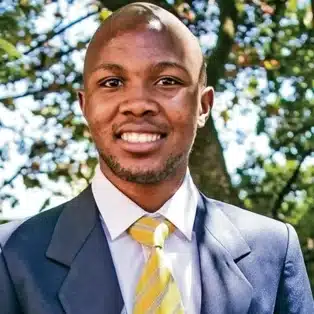 Dr Mzwanele is a Senior Researcher supporting South Africa’s G20 Sherpa with policy research. He holds a PhD in Economics from the University of Birmingham and an MSc from the University of the Witwatersrand. His work covers open macroeconomics, trade, finance, and higher education policy, and he has published widely on inequality, unemployment, household debt and higher education curriculum reform.
 Kamal is the Project Lead for IEJ’s G20 work, focusing on sovereign debt and development finance. He holds a BComm (Hons) in Applied Development Economics from the University of the Witwatersrand and an Erasmus Mundus Joint Masters in Economic Policies for the Global Transition. He has worked with SCIS, UNCTAD and co-founded Rethinking Economics for Africa.