
IEJ Sovereign Debt Working Paper Series #2
Authors: Fadhel Kaboub and Andrés Chiriboga
Sovereign debt crises in the Global South are not isolated economic mishaps — they are structural features of a global economic system rooted in colonial legacies and sustained through dependency. This working paper from the Institute for Economic Justice (IEJ) challenges the narrative that current debt restructuring mechanisms, like the G20’s Common Framework or the Debt Service Suspension Initiative, can solve the crisis. These initiatives fail to address the structural roots of indebtedness, treating it as a liquidity problem rather than a deeper issue of trade imbalances, resource extraction, and economic subordination.
Debt, the paper argues, is a tool of neocolonial control — used by creditor nations and international financial institutions to keep the Global South locked into roles of resource extraction and low-value production. From Haiti’s independence debt to the modern debt burdens across Africa, Latin America, and Southeast Asia, sovereign debt has maintained economic hierarchies established during colonialism.
The paper proposes the formation of a Global South Debtors’ Coalition — a transformative platform for coordinated negotiation and collective economic planning. Learning from past coordination efforts like the Cartagena Initiative, it outlines strategies for building effective and lasting debtor alliances.
Central to this framework are three interlinked priorities: food sovereignty, energy independence, and industrial policy. The paper calls for strategic regional investments that can break the cycle of dependency and unlock long-term development.
A bold proposal — the “Bargain of the Century” — suggests leveraging the Global South’s collective market size, natural resources, and labour force to demand fairer trade, technology transfers, and investment. With South Africa holding the G20 Presidency and the FfD4 approaching, there is a real opportunity to push for a new, just, and multipolar international economic order.
This paper is a call to action: for debt justice, economic sovereignty, and a transformation agenda rooted in equity and sustainability.
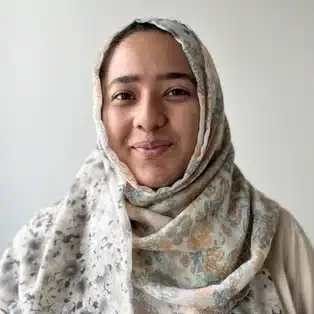 Amaarah is a Junior Programme Officer in the Rethinking Economics for Africa project. She is currently studying towards her Masters in Applied Development Economics at Wits University.
 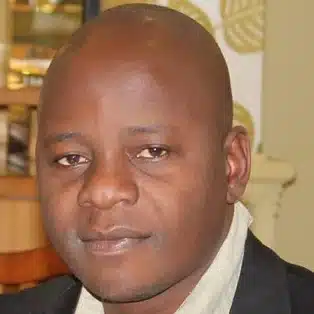 Dr James Musonda is the Senior Researcher on the Just Energy Transition at the IEJ. He is also the Principal Investigator for the Just Energy Transition: Localisation, Decent Work, SMMEs, and Sustainable Livelihoods project, covering South Africa, Ghana, and Kenya.
 Dr Basani Baloyi is a Co-Programme Director at the IEJ. She is a feminist, development economist and activist. She gained her research experience while working on industrial policy issues in academia, at the Centre For Competition, Regulation and Economic Development (CCRED) and Corporate Strategy and Industrial Development (CSID) Unit.
 Dr Andrew Bennie is Senior Researcher in Climate Policy and Food Systems at the IEJ. He has extensive background in academic and civil society research, organising, and activism. Andrew has an MA in Development and Environmental Sociology, and a PhD in Sociology on food politics, the agrarian question, and collective action in South Africa, both from the University of the Witwatersrand.
 Juhi holds a Bachelor of Arts degree in International Relations and Sociology from Wits University and an Honours degree in Development Studies from the University of Cape Town. Her current research focus is on social care regimes in the South African context, with a particular focus on state responses to Early Childhood Development and Long-Term Care for older persons during the COVID-19 pandemic. Her other research areas include feminist economics, worlds of work and the care economy.
 Bandile Ngidi is the Programme Officer for Rethinking Economics for Africa. Bandile has previously worked at the National Minimum Wage Research Initiative and Oxfam South Africa. He holds a Masters in Development Theory and Policy from Wits University. He joined the IEJ in August 2018. Bandile is currently working on incubating the Rethinking Economics for Africa movement (working with students, academics and broader civil society).
  Liso Mdutyana has a BCom in Philosophy and Economics, an Honours in Applied Development Economics, and a Masters in Applied Development Economics from Wits University. His areas of interest include political economy, labour markets, technology and work, and industrial policy. Through his work Liso aims to show the possibility and necessity of economic development that prioritises human wellbeing for everyone.
 Joan Stott holds a Bachelor of Business Science in Economics and a Master’s in Economics from Rhodes University. She brings to the IEJ a wealth of experience in public finance management, policy development, institutional capacity-building, and advancing socioeconomic and fiscal justice.
 Siyanda Baduza is a Junior Basic Income Researcher at IEJ. He holds a BSc in Economics and Mathematics, an Honours degree in Applied Development Economics, and is currently completing a Master’s degree in Applied Development Economics at the University of the Witwatersrand. Siyanda’s research focuses on the impacts of social grants on wellbeing, with a particular focus on the gendered dynamics of this impact. His interests include applied micro-economics, policy impact evaluation, labour markets, gender economics, and political economy. He is passionate about translating economic research into impactful policy.
 Shikwane is a Junior Programme Officer at IEJ focusing on civil society support and global governance in the G20. He has a background in legal compliance, IT contracting and student activism. He holds degrees in Political Studies and International Relations, as well as an LLB, from the University of the Witwatersrand.
 Dr Tsega is a Senior Researcher focusing on Women’s Economic Empowerment within the G20. She examines gender equity in economic policy, with expertise in food systems and small enterprise development. She holds a PhD in development studies from the University of the Western Cape, an MA in Development Economics, and degrees in Development Studies and Economics from UNISA and Addis Ababa University.
 Nerissa is a G20 Junior Researcher at IEJ, focusing on advancing civil society priorities within the G20 framework. She bridges data, research, and policy to advance inclusive economic frameworks. She is completing a Master’s in Data Science (e-Science) at the University of the Witwatersrand, and holds Honours and Bachelor’s Degrees in International Relations with distinction. She has worked as a Research Fellow at SAIIA and a Visiting Research Fellow at Ipea in Brazil.
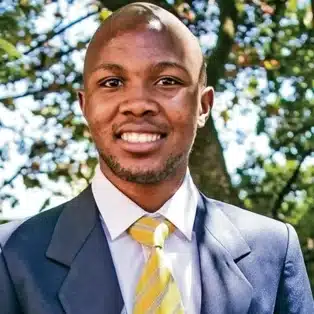 Dr Mzwanele is a Senior Researcher supporting South Africa’s G20 Sherpa with policy research. He holds a PhD in Economics from the University of Birmingham and an MSc from the University of the Witwatersrand. His work covers open macroeconomics, trade, finance, and higher education policy, and he has published widely on inequality, unemployment, household debt and higher education curriculum reform.
 Kamal is the Project Lead for IEJ’s G20 work, focusing on sovereign debt and development finance. He holds a BComm (Hons) in Applied Development Economics from the University of the Witwatersrand and an Erasmus Mundus Joint Masters in Economic Policies for the Global Transition. He has worked with SCIS, UNCTAD and co-founded Rethinking Economics for Africa.